
Sweet Viburnum Hedge: Spacing, Growth Rate & How Many Plants to Buy

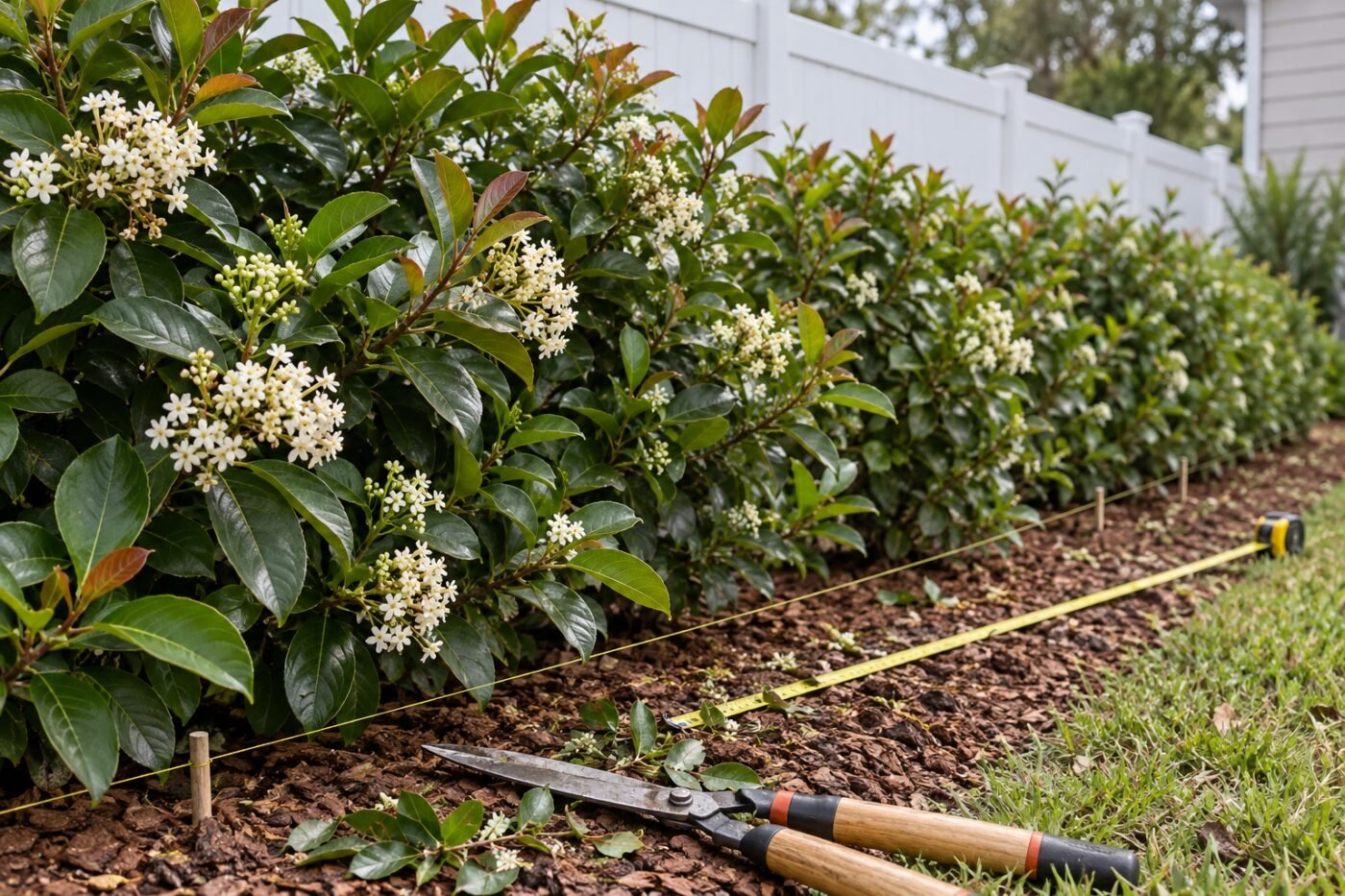
A sweet viburnum hedge is one of the quickest ways to get a tall, green privacy screen in Florida and the Gulf South. In this guide we cover exact spacing, how fast it grows, how many plants to buy for your fence line, and how to prune and care for it so it stays full from top to bottom.
Sweet viburnum hedge at a glance:
| Feature | Details |
|---|---|
| Botanical name | Viburnum odoratissimum |
| Growth rate | Fast |
| Hedge height | Easily kept at 4 to 8 feet, or taller |
| Untrimmed size | About 20 to 30 feet tall and wide |
| Spacing | 3 to 4 feet apart for a dense screen |
| Light | Full sun to part shade |
| USDA zones | 8 to 10 |
| Salt tolerance | Low, so avoid beachfront spots |
Why Choose a Sweet Viburnum Hedge?
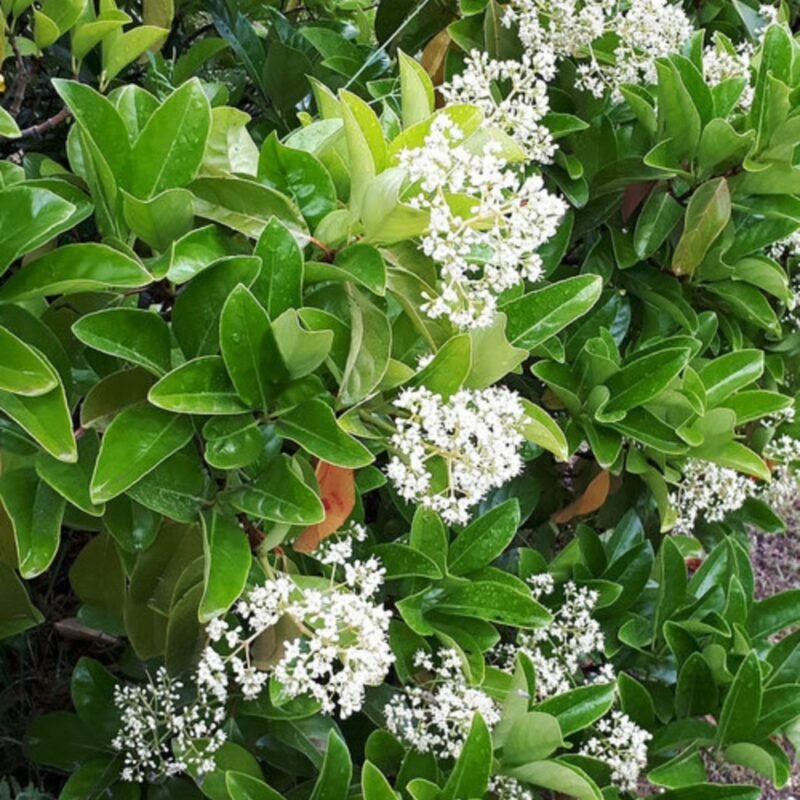
Sweet viburnum is an evergreen shrub with large, glossy leaves, red-tinged new growth and clusters of fragrant white flowers in spring. Red berries follow and ripen to black, and birds eat them. Because the leaves are so big and dense, even a young hedge blocks views well.
It also adapts to a wide range of soils, from sand to clay, and it tolerates drought once its roots are established. According to the NC State Extension Plant Toolbox, it works well as a hedge, screen, barrier or small tree. That said, it is not a fit for every yard, and we cover the downsides below.
How Fast Does It Grow?
Sweet viburnum is a fast grower in Florida’s long warm season. Once roots settle in, it puts on strong flushes of growth from spring through fall. As a result, a well-watered sweet viburnum hedge in full sun can close gaps between plants within a few growing seasons.
Growth depends on conditions, though. Plants in deep shade grow slower and thinner, while plants with at least five or six hours of sun stay dense to the ground. Regular water during the first year also makes a big difference, since a stressed young plant spends its energy surviving instead of growing.
From our live starter plants, here is a realistic timeline:
- First year: roots spread and plants branch out after light tip pruning.
- Second year: plants gain real height and begin to touch at 3-foot spacing.
- Third year and beyond: the row knits together into a solid screen you can shape.
Sweet Viburnum Hedge Spacing
Many guides only say “several feet apart,” so here are clear numbers. Measure spacing on center, which means from the middle of one plant to the middle of the next.
| Spacing | Best for | Trade-off |
|---|---|---|
| 3 feet | Fastest, densest privacy | More plants to buy |
| 4 feet | Standard hedge, good balance | Takes a bit longer to close |
| 5 feet | Long property lines, lower cost | Slower fill, looser look |
For most yards, 3 to 4 feet is the sweet spot for a sweet viburnum hedge. For a wide buffer, you can plant a staggered double row instead. Set two rows about 3 feet apart and offset the plants in a zigzag, so each plant fills the gap in the row beside it.
Also leave room behind the row. Plant at least 3 to 4 feet out from a fence, wall or house, because a mature plant gets wide and you need space to trim the back side. In addition, keep it away from windows and eaves, where it will quickly outgrow the spot.
How Many Plants Do You Need?
To count your plants, divide the hedge length in feet by your spacing, round down, and then add one for the end plant. For example, a 60-foot fence line at 4-foot spacing needs 16 plants. This table does the math for a sweet viburnum hedge of common lengths.
| Hedge length | 3 ft spacing | 4 ft spacing | 5 ft spacing |
|---|---|---|---|
| 20 feet | 7 plants | 6 plants | 5 plants |
| 40 feet | 14 plants | 11 plants | 9 plants |
| 60 feet | 21 plants | 16 plants | 13 plants |
| 80 feet | 27 plants | 21 plants | 17 plants |
| 100 feet | 34 plants | 26 plants | 21 plants |
For a staggered double row, roughly double the count. Then consider ordering one or two extra plants, so you have a spare to fill any gap later. Our sweet viburnum starter plants come in multi-plant bundles, which lowers the cost per plant for a long row.
Planting a Sweet Viburnum Hedge Step by Step
- Mark the line: first, run a string between two stakes so the row stays straight.
- Prep the strip: remove grass and weeds in a band about 2 feet wide, then loosen the soil.
- Space the holes: next, mark each hole along the string with a measuring tape.
- Set the depth: keep the top of the root plug level with the ground, never deeper.
- Water and mulch: finally, soak each plant and add 2 to 3 inches of mulch, kept off the stems.
New shrubs need steady water until roots spread. In UF/IFAS research on shrub establishment, frequent small waterings beat large, occasional soakings, and shrubs established in about 20 to 28 weeks. So water every couple of days at first, then gradually cut back. Water at the soil line when you can, because wet leaves invite fungal problems.
How and When to Prune
Pruning is what turns a row of shrubs into a hedge. In the first year, pinch or snip the tips of new shoots, which makes each plant branch low and fill from the ground up. Don’t rush height, because a dense base matters more than a tall, thin top.
Once the hedge is established, shear it after the spring bloom, then touch it up as needed through summer. In North Florida, we suggest finishing major trimming by early fall, so new growth can harden before the first cold nights. Also, shape the hedge slightly wider at the bottom than the top. UF/IFAS Extension in Charlotte County recommends this tapered shape so sunlight reaches the lower branches evenly.
Avoid shearing the sides straight up or cutting the top flat and wide. Otherwise, the lower leaves get shaded out and the base turns bare and leggy over time.
Sweet Viburnum Hedge Care and Common Problems
Once established, a sweet viburnum hedge is fairly low maintenance. Still, a few issues come up often in Florida landscapes:
- Thin bark damage: the bark is thin and easily injured, so keep mowers and string trimmers away with a mulch ring.
- Mites and other pests: purple mites, scale, thrips and whiteflies can appear, especially on stressed plants.
- Leaf spot and dieback: overhead sprinklers that keep leaves wet can encourage fungal disease.
- Salt spray: it does not do well in salty, oceanfront conditions.
- Cold: it is hardy in zones 8 to 10, and it may lose some leaves in a hard freeze.
Fertilize lightly in spring and again in summer if growth looks pale. However, skip heavy feeding, since it pushes soft growth that pests love. Finally, note that the berries are mildly toxic if eaten, so discourage pets and children from snacking on them.
Is It Right for Your Yard? Alternatives to Consider
Choose sweet viburnum if you want a tall, fast, evergreen screen in zones 8 to 10 with room for a plant that wants to be big. On the other hand, if you live right on the coast, wax myrtle handles salt far better. For a narrow, formal hedge, podocarpus stays slimmer, and for a short hedge under 6 feet, Viburnum Spring Bouquet is a compact cousin. You can compare all of them in our privacy hedge collection.
What Arrives When You Order a Sweet Viburnum Hedge
We ship sweet viburnum as live, rooted starter plants under 12 inches tall. Each one comes potted with its soil plug intact, not bare-root, and wrapped to hold moisture on the trip. These are young plants, so plan on a few seasons of growth before your sweet viburnum hedge reaches full privacy height.
Small plants do have advantages, though. They transplant easily, cost far less than large containers, and adapt quickly to your soil. We offer free USPS First-Class shipping on most orders, and our 30-Day Happy Gardener Guarantee covers your purchase. When the box arrives, read our tips on what to do after your plants arrive.
Sweet Viburnum Hedge FAQ
How far apart should I space the plants?
Plant 3 to 4 feet apart on center for a dense privacy screen. Go to 5 feet for long property lines when budget matters more than speed.
How tall does a sweet viburnum hedge get?
Most people keep it between 6 and 12 feet with regular trimming. Left alone, sweet viburnum can reach 20 to 30 feet and become a small tree.
When is the best time to trim?
Do the main shearing after the spring flowers fade, then trim lightly through summer. In North Florida, finish heavy pruning by early fall.
Does it need full sun?
It grows in full sun to part shade. However, plants with at least five or six hours of direct sun stay fuller at the base.
Are the berries toxic to dogs?
The berries are considered mildly toxic if eaten. So keep an eye on pets that like to chew, and call your vet if one eats a large amount.
Plan Your Sweet Viburnum Hedge Today
With the right spacing and a little early pruning, a sweet viburnum hedge gives you a fragrant, full evergreen screen that lasts for decades. Measure your fence line, use the table above to count your plants, and then pick the bundle size that fits. Order live sweet viburnum plants from our Jacksonville nursery, or call us at (904) 664-5227 if you have questions.