
Buying Starter Plants Online: Are Small Plants Really Worth It?

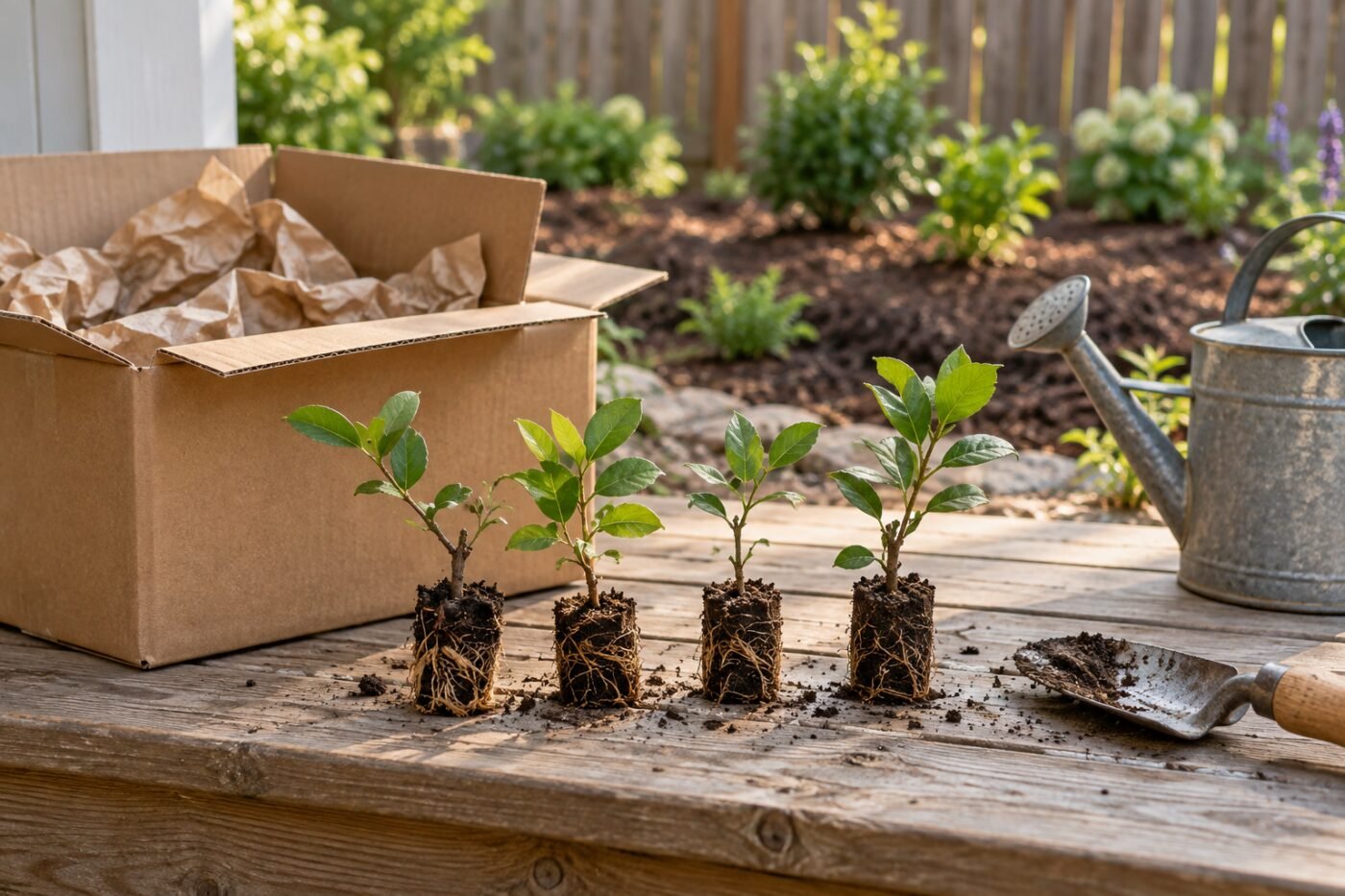
Buying starter plants online can save you a lot of money, but only if you know what you are getting and what to expect after it arrives. In this guide we compare a starter plant with a 3-gallon nursery shrub on cost, growth and care, so you can decide when small plants are worth it and when a bigger one is the smarter buy.
The short answer:
- Starter plants cost far less per plant, so they make the most sense for hedges, rows and mass plantings.
- Smaller root balls need daily care for a shorter time, according to UF/IFAS research on shrub establishment.
- Fast growers like sweet viburnum close the size gap quickly. Slow growers like podocarpus take longer, so plan for patience.
- You trade instant size for savings. If you need a finished look this month, buy bigger.
- Good sellers ship young plants rooted in soil, not bare-root, and back them with a guarantee.

What Are Starter Plants, Exactly?
A starter plant is a young, rooted plant grown in a small pot. It has its own root system and soil, so it is a real plant, not a cutting or a seed. At our nursery, every starter ships under 12 inches tall with the root plug of soil intact, then gets wrapped to hold moisture on the trip.
That size is the honest trade-off. When you open the box, you will see a small plant, not a hedge. However, the plant inside is the same species and variety that grows into the mature sizes on each product page. In other words, you pay for the genetics and the roots, and your yard supplies the years.
Starter Plant vs. 3-Gallon Shrub: How They Compare
Most of the debate comes down to five things: price, size, shipping, labor and care. Here is how a mail-order starter stacks up against a typical 3-gallon shrub from a garden center.
| Factor | Starter plant | 3-gallon shrub |
|---|---|---|
| Size at purchase | Under 12 inches | Often 1.5 to 3 feet |
| Cost per plant | Low, and lower again in bundles | Usually several times higher |
| Getting it home | Delivered to your door | Heavy pots, truck or trailer for big orders |
| Planting hole | Small, dug in minutes | Wide hole for a large root ball |
| Establishment watering | Shorter period | Longer period |
| Visual impact | Builds over one to three seasons | Immediate |
The cost gap grows with every plant you need. For example, a 60-foot fence line at 3-foot spacing takes about 20 shrubs. Multiply the price difference by 20, and buying starter plants online often frees up enough budget for mulch, drip line and a few extra plants as backups.
Do Small Plants Catch Up to Bigger Ones?
This is the key question for anyone buying starter plants online. Often, yes, but not always, and not overnight. A larger plant spends its first months growing roots into your soil before it puts on much new top growth. Meanwhile, a small plant has less root ball to “catch up,” so it can settle in and start growing sooner.
Research supports a balanced view. A Florida study published in Arboriculture & Urban Forestry compared baldcypress, red maple and longleaf pine planted from three container sizes. After five years, the smaller trees of the two broadleaf species largely caught up in height with the largest containers. The slow-starting longleaf pine did not catch up, though.
So species matters. Vigorous plants close the gap fast, while slow growers keep their head start for years. That is why we suggest matching plant size to the plant’s growth rate, not just to the price tag.
Why Smaller Root Balls Need Less Babysitting
Every new shrub needs regular water until its roots grow out into the surrounding soil. The UF/IFAS guide to establishing shrubs in Florida landscapes notes that plants from smaller containers need irrigation for a shorter period, while larger containers take longer to establish. It also reports that well-watered shrubs usually establish within about 20 to 28 weeks.
In practice, that means a big shrub can dry out and stall if you miss watering in a hot week. A small plant still needs attention, but its root ball meets native soil quickly. As a result, the weeks of hand watering tend to end sooner, especially when you plant in the cooler months.
When Buying Starter Plants Online Makes the Most Sense
Small plants shine when you need many of the same plant or when the plant grows quickly. Here are the situations where we think buying starter plants online is the clear winner:
- Privacy hedges. Rows of 10, 20 or 40 plants add up fast. Bundles of sweet viburnum keep the per-plant cost down, and it grows quickly in Florida’s long warm season. Our sweet viburnum spacing and plant-count guide shows exactly how many to order.
- Fast-growing trees. A vigorous tree like Natchez crape myrtle gains height every summer, so a starter becomes a real tree within a few seasons.
- Mass plantings and borders. Groundcovers and edging plants fill in faster when you can afford to plant them at the right density.
- Long-distance shopping. Many varieties never show up at big-box stores. Ordering starters lets you choose the exact plant you want.
If you are still choosing a hedge plant, our list of fast-growing privacy hedge plants for Florida compares nine options side by side.
When a Bigger Plant Is the Better Buy
Buying starter plants online is not always the best choice. We would rather you buy the right plant than the cheapest one. A larger container makes sense when you need instant screening for a new neighbor, or when an HOA wants a finished look before an inspection. It also helps with a single focal plant beside the front door.
Slow growers are the other case. Podocarpus is a beautiful formal hedge, yet the NC State Extension Plant Toolbox lists it as slow-growing. Starters still work well if you are patient, and you save the most money on long hedges. Just expect it to take noticeably longer to fill in than sweet viburnum. Also note that podocarpus seeds can cause low-level toxicity if eaten, so plant with care around pets and small children.
How Starter Plants Survive Shipping
Shipping stress is the most common worry about buying starter plants online, and it is a fair one. Small plants actually travel better than big ones because they are light, compact and less likely to snap. We pack each plant in its soil plug, wrap it to hold moisture and send it by USPS First-Class, with free shipping on most orders.
We also watch the weather. During freezes or extreme heat, we may hold orders so plants do not sit in a hot or frozen truck. Before you order anywhere, our post on what to check before you buy plants covers zones, sellers and red flags.
What Arrives When You Order
Here is exactly what to expect when buying starter plants online from Carlo’s Plant Farm, so there are no surprises on delivery day:
- A live, rooted plant under 12 inches tall, potted with its soil, not bare-root.
- Single plants or multi-plant bundles, which lower the cost per plant for hedges.
- Orders processed in 2 to 5 business days, shipped within the United States.
- Our 30-Day Happy Gardener Guarantee. If a plant arrives damaged, contact us within 48 hours with photos.
Leaves may look a little tired after a few days in a box, and that is normal. Open the package right away, water the plant and give it bright shade for a day or two. Then follow our step-by-step guide on what to do after your plants arrive.
Planting and Care for the First Season
Good planting habits are the other half of buying starter plants online successfully, because small plants have less stored energy. The UF/IFAS guide to planting shrubs recommends a few simple steps that apply to starters too:
- Dig wide, not deep. Make the hole about three times the width of the root ball.
- Set it level. Keep the top of the root ball even with or slightly above the soil around it.
- Loosen circling roots. Trim or tease out any roots that wrap around the plug.
- Mulch, but not on the plant. Spread 2 to 3 inches of mulch around the bed, and keep it off the root ball.
- Water on a schedule. Water often for the first weeks, then taper off as new growth appears.
Timing helps too. In Florida, fall gives roots months of mild weather before summer heat. Our guide to fall planting in Florida lists what to plant in October and November.
Buying Starter Plants Online: FAQ
Are starter plants worth the money?
For most hedges, borders and fast-growing trees, buying starter plants online is worth it. You pay much less per plant, and vigorous species catch up in a few seasons. However, if you need instant size or the plant grows slowly, a larger container may be worth the extra cost.
How long until a starter plant looks like a real shrub?
It depends on the species and care. In Florida, a fast grower like sweet viburnum usually branches out in the first year and gains real height in the second. Slow growers such as podocarpus take several years to form a full hedge.
Can I plant small shrubs in the fall?
Yes, and in Florida it is one of the best times. UF/IFAS notes that shrubs can go in during any season here. Also, milder fall weather usually means less watering stress while roots settle in.
Should I pot them up first or plant them straight in the ground?
We suggest planting directly in the ground once the plant has rested a day or two. If your bed is not ready, you can move the plant into a slightly larger pot and keep it watered until planting day.
What if a plant arrives damaged?
Contact us within 48 hours with photos at carloplantfarm@gmail.com or (904) 664-5227. Our 30-Day Happy Gardener Guarantee covers you.
The Bottom Line
Small plants are not a shortcut to an instant landscape. Still, they are the most affordable way to plant a long hedge, a row of trees or a full bed, and they often establish with less fuss than big containers. So if you have a season or two of patience, buying starter plants online gets you more plants for your budget. Browse our privacy hedge plants or shop all live starter plants to get started.