
Florida Ground Cover Plants: Best Options for Sun and Sand

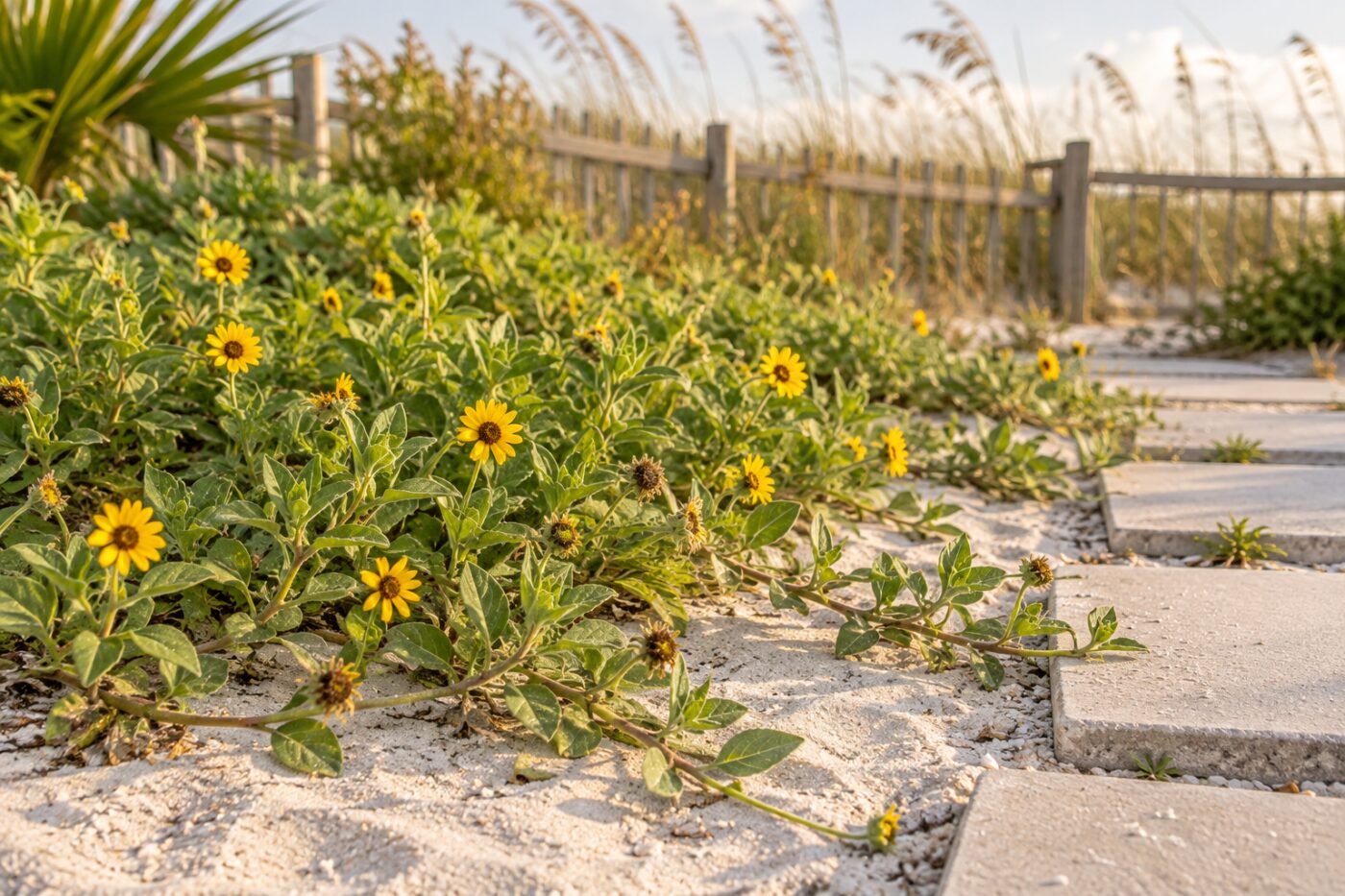
Florida ground cover plants solve two common yard problems at once: hot, sandy spots where turf keeps thinning out, and bare beds that fill with weeds every summer. In this guide we compare seven tough options for sun and sand, with spacing, coverage per 100 square feet and honest notes on the drawbacks of each one.
Quick answer: the best Florida ground cover plants for sun and sand
- Beach or coastal sand, full sun: dune sunflower, a fast native that handles salt spray.
- Sun or shade, low and evergreen: Summer Sunset Asiatic jasmine.
- Slopes and erosion in North Florida: Prince of Wales creeping juniper.
- Dry, hot beds with color: orange bulbine.
- Neat edging, part shade: Aztec grass (variegated liriope).
- Lawn alternative with yellow flowers: perennial peanut.
- Tall filler for a mass planting: sterile Mexican petunia ‘Purple Showers’.
What Makes a Good Ground Cover for Florida Sand?
Sandy Florida soil drains fast and holds few nutrients. So the best ground covers share a few traits: deep roots, good drought tolerance once settled, and the ability to spread without constant feeding. Salt tolerance also matters for Florida ground cover plants near the coast or along the Intracoastal.
Foot traffic is the other big question. Most ground covers are not lawn grass, and very few handle daily walking. For example, UF/IFAS notes that Asiatic jasmine and perennial peanut both do poorly in high-traffic areas. If you need a path, plan stepping stones or mulch walkways first, then plant around them.
Finally, think about winter. Some sun lovers slow down, freeze back or go dormant after a frost in North Florida, while others stay green all year. Our chart below flags which is which.
7 Florida Ground Cover Plants Worth Planting
Each pick below includes its mature size, where it fits best and the catch you should know about before you buy.
Dune Sunflower (Helianthus debilis)
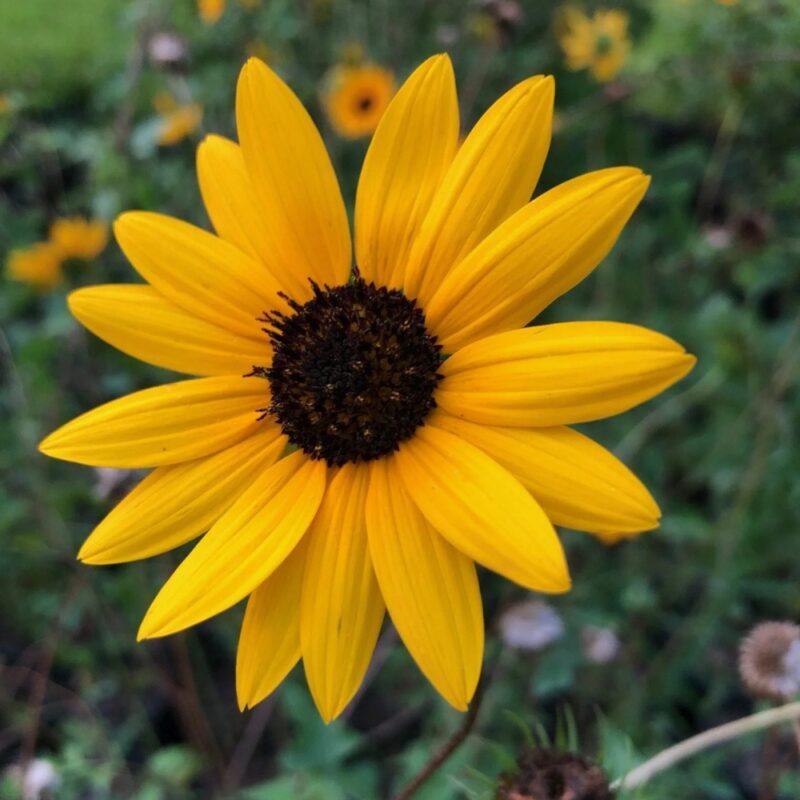
Dune sunflower, also called beach sunflower, is a Florida native that blooms yellow for most of the year and draws butterflies and bees. It loves full sun, sandy soil and salt spray. Among Florida ground cover plants, it is one of the best choices for beachfront yards. In fact, a UF/IFAS Lee County fact sheet notes that one plant can cover an area as large as 8 by 8 feet during a summer growth spurt.
The catch is lifespan. Established plants bloom hard for about two years, then turn woody and leggy. However, they reseed, so new seedlings usually fill the gaps. Also, avoid overwatering, because extra irrigation encourages rust disease. UF/IFAS also advises against mixing east coast and west coast subspecies, since they can hybridize.
Summer Sunset Asiatic Jasmine
Summer Sunset jasmine is a colorful form of Asiatic jasmine (Trachelospermum asiaticum) with leaves marbled in orange, red, cream and green. It forms a dense, weed-smothering mat about 6 to 18 inches tall. According to UF/IFAS Gardening Solutions, Asiatic jasmine grows in dense shade or full sun, handles salt and rarely needs extra irrigation once rooted. That makes it one of the most versatile Florida ground cover plants for yards with mixed sun and shade.
That said, it is slow at first. UF/IFAS suggests 18-inch spacing and says it takes about two seasons to fill in completely. It also does not tolerate foot traffic, and lots of water and fertilizer can make it aggressive. So edge it once a year and go easy on feeding.
Prince of Wales Juniper
Prince of Wales juniper is a creeping juniper that stays just 4 to 8 inches tall but spreads 8 to 10 feet wide. Its bright green needles take on a plum tint in winter. It handles drought, salt and heat, and it is excellent on sunny slopes where mowing is risky.
However, it is a better fit for North Florida than South Florida. Creeping juniper is rated to about zone 9, and it needs sharp drainage. In wet, humid spots, junipers can develop needle blights, so plant on a mound or slope and keep irrigation off the foliage. For a taller, blue-green spreader, Parsoni juniper is another option.
Orange Bulbine ‘Hallmark’
Orange bulbine is a grass-like succulent with wiry stalks of orange, star-shaped flowers from spring through fall. A UF/IFAS Charlotte County article lists ‘Hallmark’ at about 10 inches tall and 2 feet wide, and it says bulbine does great in poor, dry soil. As a result, it is one of the most colorful Florida ground cover plants for hot beds along driveways and walks.
Drainage is the rule. Bulbine rots in soggy ground, so skip low spots that hold water. Also note that UF/IFAS rates bulbine for zones 9b to 11, while our product page lists 8 to 11. In North Florida, a hard freeze can knock it back, so treat it as a perennial that may need a spring trim.
Aztec Grass (Liriope muscari)
Aztec grass is a variegated lilyturf with green-and-cream leaves that brighten borders and edges. It forms neat clumps rather than a running mat, so it works best for edging, under trees and in part shade. UF/IFAS reports few serious pests or diseases on liriope, which makes it very low maintenance.
Because it clumps, Aztec grass covers ground more slowly than a spreader. Instead of using it for a big lawn replacement, line a walkway or frame a bed with it. In blazing, all-day sun on dry sand, it will look its best with some afternoon shade.
Perennial Peanut
Golden Glory perennial peanut is one of the best-known lawn alternatives in Florida. It fixes its own nitrogen, so it needs little or no fertilizer, and it flowers yellow from spring through fall. Among Florida ground cover plants, it comes closest to a flowering lawn. UF/IFAS recommends 12 to 18 inches between plants so they fill in completely.
There are trade-offs, though. In colder parts of the state, it can drop its leaves in winter and show brown rhizomes until spring. It also spreads by rhizomes, so UF/IFAS suggests metal or fiberglass edging along beds. Finally, our Golden Glory is currently out of stock, so check the product page before you plan around it.
Mexican Petunia ‘Purple Showers’
Purple Showers is not a true ground cover. It grows 3 to 4 feet tall, so it works as a bold, purple filler behind lower plants or in a wet-to-dry mass planting. We include it because it is one of the toughest bloomers for Florida heat.
Honesty matters here. Wild Mexican petunia is a Category I invasive in Florida. However, UF/IFAS states there is no documented evidence of the sterile cultivars, including ‘Purple Showers’, invading natural areas. Even so, it forms expanding clumps, so give it an edged bed away from ponds and wild areas.
Ground Cover Spacing and Coverage Chart
Use this chart to plan how many Florida ground cover plants to buy. The plant counts assume a square grid; staggered rows use a few more plants but fill in more evenly.
| Plant | Mature height | Spacing | Plants per 100 sq ft | Winter look |
|---|---|---|---|---|
| Dune sunflower | About 1 to 2 feet | 36 to 48 inches | About 6 to 11 | Slows or freezes back |
| Summer Sunset jasmine | 6 to 18 inches | 18 inches | About 44 | Evergreen |
| Prince of Wales juniper | 4 to 8 inches | 36 to 48 inches | About 6 to 11 | Plum-tinted evergreen |
| Orange bulbine | About 10 inches | 18 to 24 inches | About 25 to 44 | May freeze back |
| Aztec grass | About 12 inches | 12 to 18 inches | About 44 to 100 | Evergreen |
| Perennial peanut | Low mat | 12 to 18 inches | About 44 to 100 | May go dormant |
| Purple Showers | 3 to 4 feet | 24 to 36 inches | About 11 to 25 | May freeze back |
Closer spacing means faster coverage and fewer weeds, while wider spacing saves money but takes longer. For creeping juniper, NC State lists a much wider spacing for mature plants. Since our juniper ships small, a tighter 3 to 4 feet gets you coverage sooner.
How to Replace Grass with Ground Cover
Swapping a tired patch of turf for Florida ground cover plants works best in stages. First, kill or remove the existing grass completely, because runners left behind will compete with your new plants. Next, loosen the top few inches of sand and mix in a little compost if the soil is very poor.
Then lay out your plants on the grid from the chart before you dig. After planting, add 2 to 3 inches of mulch between plants to hold moisture and block weeds, but keep it off the crowns. Finally, water every day or two for the first couple of weeks, then taper off as roots spread.
Weeding is the real work in year one with any Florida ground cover plants. So set aside a few minutes each week until the plants knit together.
Planting and Care Tips
- Timing: fall and early spring are ideal across much of the state. Our guide to fall planting in Florida covers what to plant in October and November.
- Water: water deeply at planting, then cut back. Overwatering causes more ground cover problems than drought does.
- Fertilizer: use a light, slow-release feed once or twice a year at most, especially for jasmine and dune sunflower.
- Trimming: mow or shear Asiatic jasmine in spring, and cut leggy dune sunflower stems back before the rainy season.
- Pets: if you have dogs or cats, check each plant against the ASPCA toxic plant list before planting.
What Arrives When You Order
We ship live, rooted starter plants under 12 inches tall. Each one comes potted with its root plug of soil intact, not bare-root, and wrapped to hold moisture. These are young plants, so expect a season or two before they reach the sizes in this guide.
Because Florida ground cover plants go in by the dozen, our multi-plant bundles lower the cost per plant for larger beds. Shipping is free on most orders within the United States, and we may hold orders during freezes or extreme heat. If you are new to small plants, read our post on buying starter plants online. Then see what to do after your plants arrive. Every order is also covered by our 30-Day Happy Gardener Guarantee.
Florida Ground Cover Plants FAQ
What is the best ground cover for full sun in Florida?
For full sun and sandy soil, dune sunflower is hard to beat among Florida ground cover plants, especially near the coast. Perennial peanut and orange bulbine are also strong choices for hot, dry beds.
What ground cover can you walk on?
Very few of these plants tolerate regular foot traffic. Instead, add stepping stones or a mulch path through the planting, then let the ground cover fill in around them.
How fast do these plants spread?
Dune sunflower and perennial peanut are the fastest in summer. Asiatic jasmine is slower, and UF/IFAS says it may take two seasons to fill in.
Will these plants grow in pure sand?
Yes, dune sunflower, bulbine, juniper and Asiatic jasmine all handle sandy soil. Still, a little compost at planting helps young roots settle in faster.
Do Florida ground cover plants stay green in winter?
Asiatic jasmine, Aztec grass and juniper stay evergreen. Perennial peanut and dune sunflower may slow down, brown or go dormant after a frost in North Florida.
Final Thoughts
The right choice depends on your site. Pick dune sunflower for coastal sun, Summer Sunset jasmine for a low evergreen carpet, juniper for slopes and bulbine for hot, dry beds.
When you are ready, browse all of our Florida ground cover plants in the groundcovers and border plants collection. You can also see our drought tolerant plants for more sun-loving options, or explore coontie palm care for a native plant that handles shade.