
Wax Myrtle Privacy Screen: A Fast Native Hedge for Florida

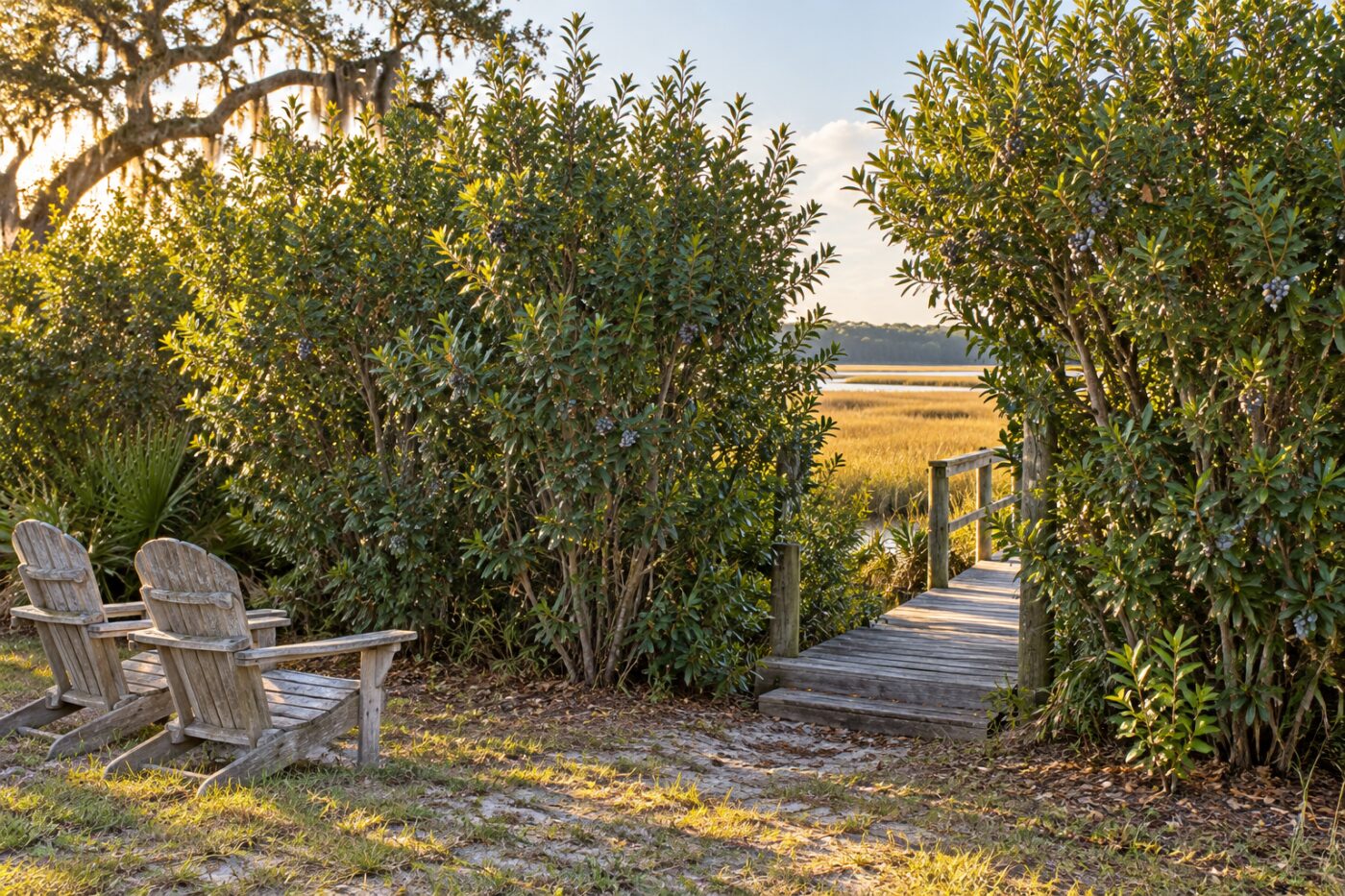
A wax myrtle privacy screen is one of the fastest ways to block a view in Florida with a plant that actually belongs here. In this guide we cover how fast it grows, how far apart to plant, how many plants you need, how to prune it, and the honest downsides, such as suckers and storm breakage, so you can decide if it fits your yard.
Wax myrtle at a glance:
| Feature | Details |
|---|---|
| Botanical name | Myrica cerifera (also listed as Morella cerifera) |
| Native range | Florida and the Southeast coastal plain |
| Growth rate | Fast, often 3 to 5 feet a year in good conditions |
| Untrimmed size | Usually 10 to 20 feet tall and wide |
| Screen spacing | 4 to 6 feet apart |
| Light | Full sun to part shade |
| USDA zones | 7 to 11 |
| Salt tolerance | High |
| Main drawbacks | Root suckers, weak wood, flammable foliage |
Why a Wax Myrtle Privacy Screen Works in Florida
Wax myrtle is an evergreen native shrub with narrow, olive-green leaves that smell spicy when you crush them. It also grows with many stems from the base, so a young plant fills out sideways as well as up. As a result, a row of them knits into a soft, informal wall of green.
It is also one of the toughest shrubs you can plant in the Southeast. The UF/IFAS Extension fact sheet rates its salt tolerance as high and lists clay, sand, loam, acidic, alkaline, wet and well-drained soils as acceptable. In other words, it handles the sandy lots, soggy low spots and windy coastal yards where many hedge plants struggle.
Finally, it does real work for wildlife. Female plants carry clusters of small, gray-blue, waxy berries that birds eat in winter, and the dense branches give them cover. So a wax myrtle privacy screen gives you privacy and a bird habitat at the same time.
How Fast Does Wax Myrtle Grow?
In fact, wax myrtle is one of the quickest native screens for the South. With full sun and steady water, it often adds 3 to 5 feet in a single growing season. Growth slows in shade, though, and plants in deep shade turn thin and leggy.
Starting from small plants, a realistic timeline in good conditions looks like this:
- First year: roots spread and the plant bulks up, usually reaching 2 to 4 feet.
- Second season: plants often reach 5 to 7 feet and start to touch at 4 to 5 foot spacing.
- By year three: most rows form a solid wax myrtle privacy screen at 6 to 8 feet or taller.
Of course, poor soil, drought or a late start can add a season. Still, few evergreen hedges close a gap this quickly, which is why a wax myrtle privacy screen is so popular for new homes.
Spacing for a Wax Myrtle Privacy Screen
For most yards, plant wax myrtle 4 to 6 feet apart, measured center to center. Use 4 feet when you want the fastest, densest screen or plan to shear it into a formal hedge. Use 5 to 6 feet for a looser, natural screen, because each plant will spread wide on its own.
Wider spacing also works for a wildlife border. For example, an NC Sea Grant coastal design for a bird-friendly screen sets wax myrtle about 6.5 feet apart. Meanwhile, keep the row at least 4 to 5 feet off a fence, wall or driveway, since untrimmed plants spread well beyond that.
Here is how many plants a single row takes, using our formula from How Many Shrubs for a Hedge:
| Row length | 4 ft apart | 5 ft apart | 6 ft apart |
|---|---|---|---|
| 25 feet | 8 | 6 | 6 |
| 50 feet | 14 | 11 | 10 |
| 75 feet | 20 | 16 | 14 |
| 100 feet | 26 | 21 | 18 |
Single Row or Staggered Row?
A single row is plenty for most fence lines, so start there for a basic wax myrtle privacy screen. However, if you need a thick sound and wind buffer, plant a staggered double row with plants 6 feet apart in each row and the rows about 3 feet apart. That roughly doubles the plant count, but it fills in faster and hides gaps if one plant fails.
Planting Your Wax Myrtle Screen Step by Step
- Pick the spot: aim for at least 4 to 6 hours of sun. Also, check for overhead lines, because untrimmed plants can reach 20 feet.
- Mark the row: run a string line, then mark each hole at your chosen spacing.
- Dig wide, not deep: make each hole two to three times wider than the root ball and no deeper.
- Set the plant: keep the top of the root ball level with the soil, then backfill with the native soil.
- Water and mulch: soak each plant, then add 2 to 3 inches of mulch, keeping it a few inches off the stems.
After planting, water every day or two for the first couple of weeks, then taper to two or three times a week. Once roots are established, usually within the first growing season, wax myrtle handles normal Florida dry spells well. For more detail on the first weeks, read our guide on what to do after your plants arrive. Fall is a great time to start, too, as our fall planting guide for Florida explains.
Pruning to Keep the Screen Full
Pruning is what turns a loose shrub into a dense wax myrtle privacy screen. First, tip back young plants by a few inches a couple of times in their first year. That pushes more side branches, so the base stays thick instead of going bare.
Next, decide on your style. For a natural screen, simply shorten long shoots once or twice a year. For a clipped hedge, shear lightly during the growing season and keep the top a little narrower than the bottom so light reaches the lower leaves.
In North Florida, do any heavy cutting in late winter, just before spring growth. Avoid big cuts in late fall, because tender new growth can get damaged by an early freeze. Also, note that berries form on older wood, so heavy shearing on female plants means fewer berries for birds.
Dealing With Suckers and Root Sprouts
Wax myrtle spreads by underground runners and sends up sprouts around its base. UF/IFAS notes these root sprouts can be a nuisance and may need removing several times a year. In a screen, some suckers help thicken the row. Even so, pull or clip any that pop up in lawns, beds or walkways, ideally while they are small.
Salt, Wind and Wet Soil
Coastal homeowners have a special reason to love this plant. The NC State Extension Plant Toolbox describes it as tolerant of high winds, sterile soil and salt spray, and it also lists the plant as highly resistant to deer. That makes it a strong choice for beach towns and barrier islands.
In addition, it grows in a wide range of moisture levels, from swampy ground to dry sandy uplands. That said, very alkaline soil can cause yellow leaves with green veins, a sign of iron deficiency. If you see that, a soil test is the best first step.
Downsides to Know Before You Plant
No plant is perfect, and honest trade-offs matter here:
- Weak wood: UF/IFAS lists wax myrtle as susceptible to breakage, so expect some storm damage. Luckily, it regrows quickly.
- Suckers: as covered above, root sprouts need regular removal near lawns and beds.
- Flammable leaves: the aromatic foliage burns easily. A UF/IFAS Escambia County article advises planting it safely away from building walls.
- Disease in some areas: a Fusarium wilt has killed plants in central and south Florida, and cankers can form on older branches.
- Cold browning: in zone 7, hard freezes can brown or drop leaves, although stems usually recover.
Lifespan is another question people ask. The extension sources we checked do not give a firm number. However, older plants tend to open up as trunks age and break, so plan to renew a tired screen by cutting it back hard in late winter. Wax myrtle resprouts from its base, which makes renewal possible.
Wax Myrtle vs Other Florida Privacy Plants
If you are comparing options, this table shows where wax myrtle stands next to other popular screens:
| Plant | Growth | Native to Florida | Salt tolerance | Best for |
|---|---|---|---|---|
| Wax myrtle | Very fast | Yes | High | Fast, informal screens, coastal yards |
| Sweet viburnum | Fast | No | Low | Tall, dense, broad-leaf hedges |
| Podocarpus | Slow to moderate | No | Moderate | Narrow, formal hedges |
| Walter’s viburnum (Densa) | Moderate | Yes | Moderate | Lower native hedges |
For a side-by-side look at the two non-natives, see sweet viburnum vs podocarpus. You can also browse our full list of fast growing privacy hedge plants for more ideas.
What Arrives When You Order
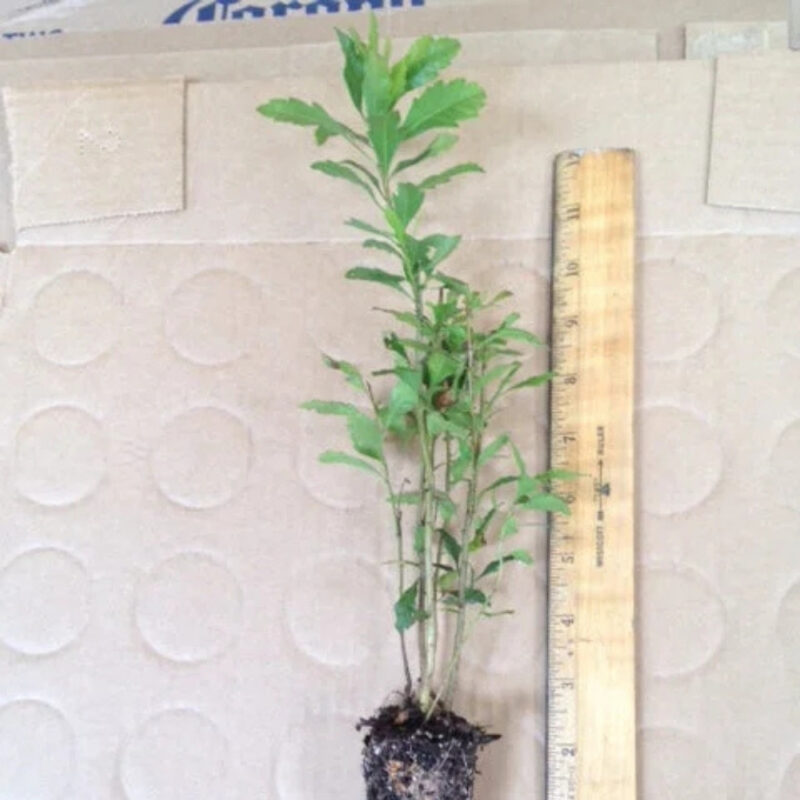
We ship wax myrtle as live starter plants under 12 inches tall, rooted in their soil plug and wrapped to hold moisture. Of course, these are young plants, not instant hedges. However, because wax myrtle grows so fast, small plants catch up quickly and settle in with less transplant stress than big container shrubs. Our post on buying starter plants online explains the trade-offs.
Bundles of several plants lower the cost per plant, which matters when a fence line needs 10 or 20 shrubs. Plus, most orders ship free by USPS First-Class, and every plant is covered by our 30-Day Happy Gardener Guarantee. You can also see all our privacy hedge plants in one place.
Wax Myrtle Privacy Screen FAQ
How far apart should I plant wax myrtle for privacy?
In general, plant 4 to 6 feet apart. Choose 4 feet for the quickest, densest wax myrtle privacy screen, or 6 feet for a looser, natural look.
Is wax myrtle messy?
Generally it is fairly tidy, but it does drop some leaves, and female plants drop berries birds miss. The bigger chore is pulling root suckers a few times a year.
How long does wax myrtle take to give privacy?
From small starter plants, most rows fill in within two to three growing seasons in full sun with regular water. So a wax myrtle privacy screen is one of the fastest native options.
Do I need male and female plants?
Only if you want berries. Wax myrtle plants are either male or female, and only females fruit. For privacy alone, the sex of the plant does not matter.
Will deer eat wax myrtle?
Usually not. NC State Extension rates it as highly resistant to deer damage, although hungry deer may still browse young plants.
Final Thoughts
If you want fast privacy, a native plant and a shrub that shrugs off salt, sand and wet soil, wax myrtle is hard to beat. Just plan for some sucker control, keep it away from the house, and prune early to keep the base full. Measure your row, pick your spacing, then start your wax myrtle privacy screen with a bundle of live wax myrtle plants from our Jacksonville nursery. Questions? Call us at (904) 664-5227.