
Italian Cypress Spacing and Care: Planting a Tall, Narrow Screen

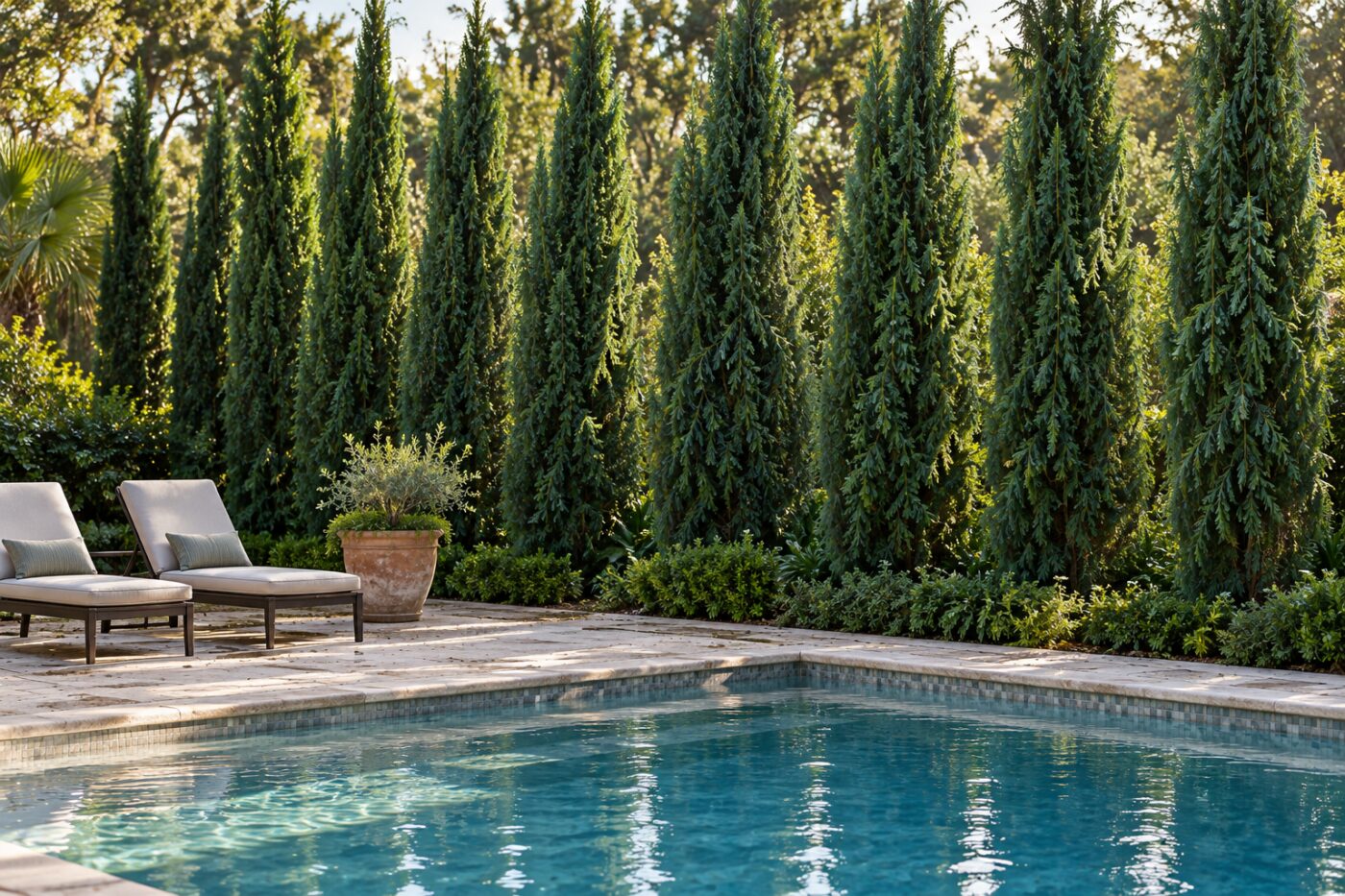
Getting Italian cypress spacing right decides whether you end up with a solid green wall or a row of lonely exclamation points. In this guide we cover how far apart to plant for a screen versus an accent, how many trees to buy, and how to keep them healthy in the humid Southeast.
Quick answer: key facts
- Dense privacy screen: about 3 feet apart, center to center, which is the UF/IFAS recommendation.
- Looser screen with gaps that close slowly: 4 feet apart.
- Accents, pairs and driveway rows: 6 feet or more, so each tree reads as its own column.
- From walls, fences and foundations: at least 3 to 4 feet, for airflow and room to spray.
- Mature width: roughly 3 to 6 feet. Height ranges from about 25 to 70 feet, depending on source and site.
- Must-haves: full sun and well-drained soil. Soggy ground leads to root rot.
Why Italian Cypress Spacing Matters So Much
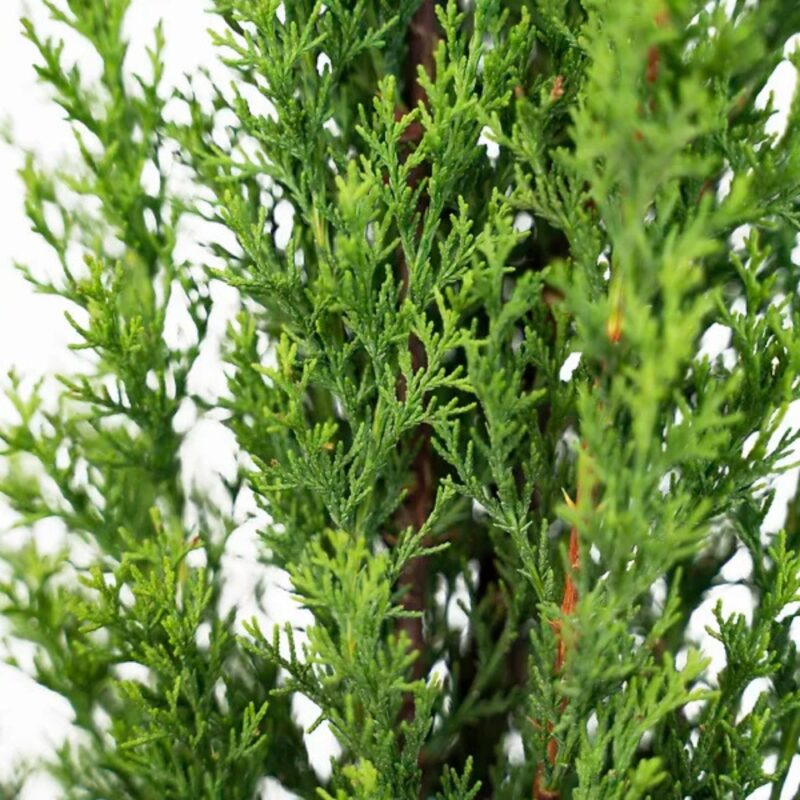
Italian cypress (Cupressus sempervirens) grows straight up and stays slim. According to the UF/IFAS fact sheet on ‘Glauca’ Italian cypress, the tree spreads only 3 to 6 feet wide. So unlike a sprawling hedge shrub, it will not fill a big gap by reaching sideways.
That narrow habit cuts both ways. On one hand, it fits tight side yards and property lines where a wide hedge would swallow the lawn. On the other hand, you cannot fix poor spacing later by pruning, because UF/IFAS states that Italian cypress should not be pruned to shape. The gap you plant is, more or less, the gap you keep.
Airflow matters too. Here in North Florida, summers are hot and humid, and crowded evergreens stay damp longer. As a result, spacing is a health decision as well as a design one.
Italian Cypress Spacing for a Privacy Screen
For a screen, UF/IFAS notes that trees planted three feet apart make a dense screen. We think that is the right starting point for most homeowners who want privacy from a neighbor or a road. At 3 feet, mature trees touch or overlap slightly, so the row reads as one green wall.
If you can live with narrow vertical gaps, 4 feet apart is a reasonable compromise. You buy fewer trees, and air moves more freely between them. However, the canopy may never fully close on trees that stay at the slim end of the 3 to 6 foot range.
We do not recommend going much closer than 3 feet. Jamming Italian cypress at 18 to 24 inches looks full sooner, but the trees then compete for water and light. In addition, the crowded inner foliage can thin and brown, which defeats the purpose of a screen.
Spacing for Accents, Pairs and Driveway Rows
Not every planting is meant to block a view. Many people use Italian cypress as vertical punctuation, framing an entry, marking corners or lining a long drive. In these designs, the open sky between trees is part of the look, so Italian cypress spacing gets much wider.
- Single specimen or pair by an entry: give each tree at least 6 feet of open space around it.
- Formal row along a driveway: 6 to 10 feet apart keeps the classic Mediterranean rhythm.
- Mixed bed with shrubs below: 6 to 8 feet, so lower plants still get sun.
These wider numbers are general design guidance rather than a fixed rule. Still, they follow from the same fact: each tree tops out only a few feet wide, so wider gaps will stay open.
How Many Italian Cypress Trees Do You Need?
To count trees, divide the length of the row by your spacing, drop any fraction, then add one tree for the far end. The chart below does the math for common runs.
| Row length | 3 ft spacing (dense screen) | 4 ft spacing (looser screen) | 6 ft spacing (accent row) |
|---|---|---|---|
| 20 ft | 7 trees | 6 trees | 4 trees |
| 40 ft | 14 trees | 11 trees | 7 trees |
| 60 ft | 21 trees | 16 trees | 11 trees |
| 100 ft | 34 trees | 26 trees | 17 trees |
For example, a 40-foot property line at 3-foot Italian cypress spacing needs 14 trees. For other shrubs, our hedge spacing chart and calculator uses the same method.
Distance From Fences, Walls and Driveways
Spacing between trees is only half of a good Italian cypress spacing plan. You also need room between the row and anything solid. Mature Italian cypress can reach about 3 feet out from the trunk on each side, so plant the row at least 3 to 4 feet from a fence, wall or house foundation.
That buffer does three jobs. First, it keeps foliage off siding and fences, where it would stay wet. Next, it gives you room to walk behind the row and spray for mites. Finally, it keeps the root zone away from footings and the dry strip along walls.
Along a driveway, set trees a little farther back, around 4 to 5 feet from the edge. Otherwise car doors, mowers and string trimmers will scrape the bark, and wounds are an easy way in for canker fungi.
Drainage: The Make-or-Break Factor
Even perfect Italian cypress spacing cannot save a tree in soggy ground, so drainage comes next. UF/IFAS warns that root rot can be a problem for Italian cypress in poorly drained soil. Plant pathologists at Texas A&M AgriLife also tie Phytophthora root rot to overwatering and wet sites.
- Watch after a storm. If puddles linger in the planting area for more than a day, pick another spot or raise the bed.
- Plant slightly high. Set the top of the root ball an inch or so above the surrounding grade in heavy soil.
- Keep lawn sprinklers off the trunks. Daily turf irrigation keeps the root zone too wet once trees are established.
- Mulch thinly. Use 2 to 3 inches, and pull it back a few inches from the trunk.
Sandy Florida soils usually drain well, which suits this tree. In contrast, compacted clay or low swales are where we would choose a different plant.
Growth Rate and What to Expect
NC State Extension describes the growth rate as medium, rapid when young and slowing significantly with maturity. So the first several years are when the row gains most of its height. Once settled, the tree also becomes highly drought tolerant, according to the NC State Extension plant toolbox.
Mature height is where sources differ. NC State lists the species at 40 to 70 feet, while UF/IFAS gives 25 to 40 feet for ‘Glauca’ and notes trees are often shorter in the eastern US. Either way, plan for a tall tree, and keep it clear of power lines and roof eaves. Height does not change Italian cypress spacing, though, because the width stays slim.
It also needs full sun. Shaded trees grow thin and lose the dense column shape, especially on the shady side of a screen.
Spider Mites and Other Common Problems
UF/IFAS lists mites as often a problem on this tree, and they are the pest we hear about most. Two-spotted spider mites thrive in dry, hot weather, according to a UF/IFAS Extension article on spider mites. Feeding causes fine stippling, then foliage turns yellow, gray or bronzed.
To check, hold a sheet of white paper under a branch and tap it. If tiny moving specks drop onto the paper, you have mites. Then treat with insecticidal soap or horticultural oil, following the label, and avoid spraying in the heat of the day. Generous Italian cypress spacing makes this much easier, because you can reach all sides of each tree.
Other issues to know about:
- Bagworms: occasional. Pick off the small hanging bags by hand before they hatch.
- Canker diseases: branches die back in patches. Cut out dead wood and clean pruners between cuts with a 10 percent bleach solution.
- Root rot: yellowing that spreads through the whole tree, usually on wet sites.
Is Italian Cypress Right for Your Yard?
Italian cypress is hardy in USDA zones 7 to 10, so it suits most of the Southeast, including our zone 9a in Jacksonville. It tolerates moderate salt spray, and UF/IFAS rates it as having little invasive potential. That said, UF/IFAS also cautions that its extreme height does not suit many home landscapes. So before settling on Italian cypress spacing, confirm you truly want a tree this tall.
If you want a column that stays shorter, the Skyrocket Juniper reaches about 15 to 20 feet and stays 2 to 3 feet wide, although it is better suited to zones 4 to 9. For a softer, wider hedge instead, see our guides to fast growing privacy hedge plants and podocarpus hedge spacing.
What Arrives When You Order
Our live Italian Cypress starter plants ship under 12 inches tall, potted with the root plug of soil intact and wrapped to hold moisture. They are young trees, not instant screens, so choose your Italian cypress spacing for the mature width, not the starter size. Because they start small, they settle in easily, but a 3-foot row will take years to close.
- Bundles: multi-plant bundles lower the cost per tree, which adds up on a 14-tree property line.
- Shipping: free USPS First-Class on most orders within the United States, processed in 2 to 5 business days.
- Weather holds: we may hold orders during freezing or extreme heat to protect the plants.
- Guarantee: our 30-Day Happy Gardener Guarantee applies. Contact us within 48 hours with photos if a plant arrives damaged.
Some people grow starters in larger pots for a season before planting the final row. Our guide to caring for plants when they arrive covers the first week, and our look at buying small plants explains the tradeoffs. Fall is a good planting window in Florida, as our fall planting guide explains.
Italian Cypress Spacing FAQ
How far apart should I plant Italian cypress for privacy?
About 3 feet apart, center to center. UF/IFAS says that spacing makes a dense screen, while 4 feet saves trees but may leave narrow gaps.
How far should Italian cypress be from a house or fence?
Plant at least 3 to 4 feet away. Then the foliage stays dry, and you can reach behind the row to inspect and spray.
Can you plant Italian cypress 2 feet apart?
You can, but we do not advise it. Crowded trees compete for water and light, and inner foliage often browns.
Why is my Italian cypress turning brown?
The usual causes are spider mites in hot, dry weather, root rot on wet soil, or canker diseases. A paper tap test quickly rules mites in or out.
Can I trim Italian cypress to keep it short?
Not really. UF/IFAS advises against pruning it, so remove only dead branches. Instead, choose a shorter plant if height is a concern.
How fast does Italian cypress grow?
It grows fast when young, then slows with age. Full sun and good drainage give the quickest, densest growth.
Plan Your Row, Then Plant
Good Italian cypress spacing comes down to purpose: about 3 feet for a screen, 6 feet or more for accents, and plenty of room from walls. Add sun, sharp drainage and an eye out for mites, and the row will stay tall and green. When you are ready, browse our Italian Cypress starter plants or explore the full privacy hedge collection.