
Drought Tolerant Plants for Florida: Low-Water Picks That Still Bloom

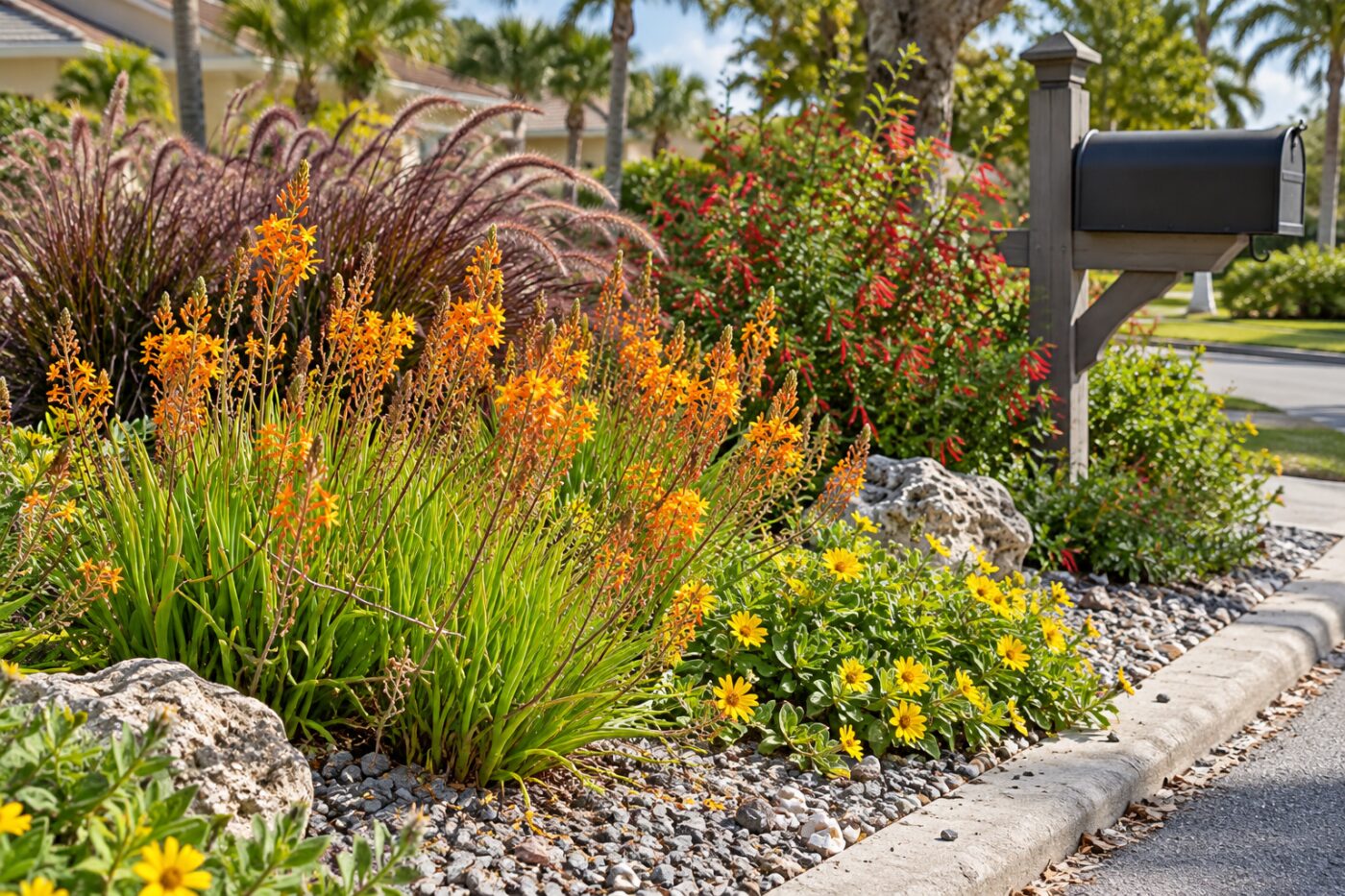
The best drought tolerant plants for Florida handle sandy soil, blazing sun and long dry springs, and the ones on this list still flower while they do it. Below we rank eight low-water bloomers we grow here in Jacksonville, flag which ones carry invasive-plant cautions, and explain the watering that every new plant needs before it can fend for itself.
Quick answer: the short list
- Toughest natives: coontie and dune sunflower.
- Longest bloom on little water: orange bulbine and firecracker plant.
- Summer color: Madagascar periwinkle, grown as an annual in most of Florida.
- Height and movement: red fountain grass, with an invasive caution.
- Moderate only: blue agapanthus and yellow African iris.
- The catch: no plant is drought tolerant on day one, so plan on regular watering for months.
What Makes Drought Tolerant Plants for Florida Different
Florida drought is not desert drought. We get heavy summer rain, then a dry season from late fall through spring. Also, most of the state sits on fast-draining sand, so water disappears quickly.
As a result, plants here need two traits. First, they must survive weeks without rain in April and May. Second, they must tolerate an August soaking without rotting. Succulent-leaved plants like bulbine, deep-rooted natives like coontie, and wiry-stemmed plants like firecracker plant all manage that balance well.
Location matters too. North Florida, including our zone 9a, sees frost most winters, while South Florida rarely does. So we note cold limits below, because a plant evergreen in Miami may die back in Jacksonville.
8 Drought Tolerant Plants for Florida That Still Bloom
We ordered this list roughly from most to least drought tolerant once established, and we sell every one as a starter.
1. Coontie (Zamia integrifolia)
Coontie is the only cycad native to the continental United States, and it may be the most forgiving of all drought tolerant plants for Florida. Once rooted, it shrugs off drought, heat and salt, and it grows in sun or shade. It stays under about 3 feet tall and spreads 3 to 5 feet wide. It does not flower, but it bears cones and hosts the rare Atala butterfly. Growth is slow, and all parts are toxic if eaten. Our coontie care guide covers it in depth, or see the Coontie Palm product page.
2. Dune Sunflower (Helianthus debilis)
Dune sunflower, also called beach sunflower, is a Florida native groundcover with yellow, brown-centered daisies nearly all year. UF/IFAS describes it as ideal for hot, dry sites, including coastal areas, and it handles salt wind well. It grows about 1 to 2 feet tall and 3 to 4 feet wide. However, it spreads quickly and can look leggy, so shear it back or replace tired patches. Start with our Dune Sunflower starters.
3. Orange Bulbine (Bulbine frutescens ‘Hallmark’)
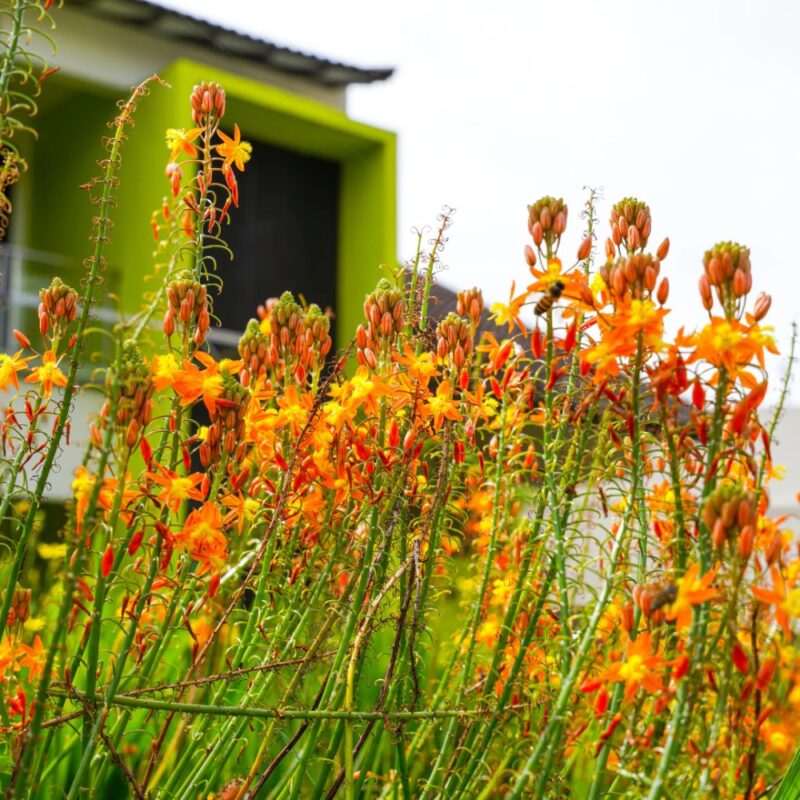
Bulbine is a small succulent perennial with fleshy leaves and spikes of orange, starry flowers. A UF/IFAS Extension demonstration garden sheet rates its water needs as low and lists it for zones 8b to 11. The key is drainage, because bulbine sulks in soggy soil. In North Florida, a hard freeze can damage the foliage, though plants usually recover. Among drought tolerant plants for Florida, it is one of the longest bloomers, and ‘Hallmark’ stays low enough for edging. See our Orange Bulbine page.
4. Firecracker Plant (Russelia equisetiformis)
Firecracker plant forms a fountain of rush-like stems covered in scarlet tubular flowers that hummingbirds love. A UF/IFAS Extension fact sheet says it tolerates extended drought once established and has good salt tolerance. It is rated for zones 9b to 11 by UF/IFAS, so in our area it can freeze back in a cold winter. It also gets bigger than many people expect, often 3 to 5 feet tall and wider than that, so give it room. Our firecracker plant post has more tips, or shop the Firecracker Plant here.
5. Madagascar Periwinkle (Catharanthus roseus)
Madagascar periwinkle, often called annual vinca, covers itself in pink, white or red pinwheel flowers through the hottest months. UF/IFAS says it likes to be kept on the dry side, because the roots rot when irrigated too often. In fact, overwatering kills more of these drought tolerant plants for Florida beds than drought does. Although technically a perennial, it is treated as an annual in most of Florida. It is also toxic if eaten. Shop Madagascar Periwinkle starters for summer beds.
6. Red Fountain Grass (Pennisetum setaceum ‘Rubrum’)
Red fountain grass adds burgundy blades and soft, pink-purple plumes from summer into fall. UF/IFAS calls it moderately drought tolerant, and it is perennial in zones 9 to 11. After a hard freeze, it may regrow from the roots in spring. We cover its invasive status below the list. Find it on our Red Fountain Grass page.
7. Blue Agapanthus (Agapanthus africanus)
Agapanthus, or lily of the Nile, sends up tall stalks of lavender-blue flowers in late spring and summer. UF/IFAS rates its drought tolerance as moderate, so among drought tolerant plants for Florida it sits on the thirstier end. It blooms best with 6 or more hours of sun and well-drained soil that does not stay bone dry. UF/IFAS lists agapanthus for zones 9a to 11, while our product page rates this one for 8 to 11, so mulch it well in colder spots. See our Blue Agapanthus page.
8. Yellow African Iris (Dietes bicolor)
Yellow African iris forms evergreen fans of sword-like leaves with pale yellow flowers marked in maroon. However, it earns a place among drought tolerant plants for Florida only with a caveat. UF/IFAS rates its drought tolerance as moderate and its salt tolerance as poor, and it performs best in part shade or in sun with regular water. In other words, it survives dry spells but then blooms less. It fits the zone between a dry bed and irrigated lawn. Shop the Yellow African Iris.
Comparison Table: Low-Water Bloomers at a Glance
Here is how these drought tolerant plants for Florida compare side by side.
| Plant | Native? | Drought tolerance | Salt tolerance | Cold notes |
|---|---|---|---|---|
| Coontie | Yes | High | High | Evergreen statewide |
| Dune sunflower | Yes | High | High | May brown in frost, regrows |
| Orange bulbine | No | High | Low (UF/IFAS); keep out of salt spray | Hard freeze can damage leaves |
| Firecracker plant | No | High | Good | Can freeze back in North Florida |
| Madagascar periwinkle | No | High | Good | Grown as a warm-season annual |
| Red fountain grass | No | Moderate | Moderate | Annual-like after hard freezes |
| Blue agapanthus | No | Moderate | Moderate | Mulch in zone 8 |
| Yellow African iris | No | Moderate | Poor | Zones 8b to 11 |
Salt ratings combine UF/IFAS notes with our product descriptions, so treat them as a general guide to drought tolerant plants for Florida coasts. Coastal gardeners should lean on the top five rows.
Invasive Plant Check for Florida Gardeners
Honesty matters here, because several popular drought tolerant plants for Florida are not native. The UF/IFAS Assessment of Non-native Plants in Florida’s Natural Areas is the state’s main tool for judging that risk. Here is how our list stands, based on our research this fall.
- Red fountain grass: the green species, Pennisetum setaceum, is a Category II invasive with the Florida Invasive Species Council. Also, the UF/IFAS assessment for fountain grass says “Caution, manage to prevent escape” in all three zones. The purple ‘Rubrum’ type is widely sold as seldom setting seed, yet a UF/IFAS fact sheet calls it potentially invasive and notes it can reseed into surrounding landscapes. So cut the plumes before they shed, and do not plant it next to natural areas.
- Madagascar periwinkle: its UF/IFAS assessment lists it as not a problem species in North and Central Florida, but “Caution” in South Florida.
- Firecracker plant: not considered a problem in North Florida, while the Central and South Florida reviews are still in progress. A UF/IFAS Extension sheet also warns it can escape and form thickets on disturbed sites.
- Bulbine, agapanthus and African iris: we found no assessment listing for these, and UF/IFAS fact sheets call agapanthus and Dietes bicolor not known to be invasive.
- Coontie and dune sunflower: both are Florida natives.
How to Water New Drought Tolerant Plants
This is the part most lists skip. Even drought tolerant plants for Florida need regular water until their roots spread into the surrounding soil. Until then, each one depends on the small root ball it arrived with.
For shrubs, UF/IFAS research on establishing shrubs found that about 1 gallon every 8 days north of Orlando, or every 4 days in South Florida, worked for 3-gallon plants. Establishment took roughly 20 to 28 weeks. Smaller starter plants have smaller root balls, so they dry out faster.
- First two weeks: water small starters every day or two unless it rains, keeping the root zone moist but not soggy.
- Weeks three to eight: taper to two or three times a week.
- After that: water about once a week in dry spells until new growth is steady, often several months.
- Once established: water only in long dry stretches.
Watch the plant, not the calendar. For example, periwinkle and bulbine resent wet feet, so let the top inch of soil dry between waterings. Coontie, meanwhile, establishes slowly and may need help most of its first year.
Designing a Low-Water Bed That Blooms
Group drought tolerant plants for Florida yards by water need, which is a core Florida-Friendly Landscaping principle. Put coontie, dune sunflower, bulbine and firecracker plant in the driest, sunniest spot. Then place agapanthus and African iris closer to the house or downspouts, where they catch a little more moisture.
Next, add 2 to 3 inches of mulch to keep roots cooler and slow evaporation. Gravel mulch suits bulbine and periwinkle, because it keeps crowns dry. In addition, plant in fall or early spring so roots grow before summer heat. Our guide to fall planting in Florida explains the timing, and our ground cover guide for sun and sand pairs well with this list.
What Arrives When You Order
We ship live, rooted starter plants under 12 inches tall, potted with the root plug of soil intact and wrapped to hold moisture. They are young plants that take a season or more to reach the sizes above, so the establishment watering matters even more.
- Bundles: multi-plant bundles lower the cost per plant, which helps when you fill a whole bed.
- Shipping: free USPS First-Class on most orders within the United States, processed in 2 to 5 business days.
- Weather holds: we may hold orders during freezing or extreme heat to protect the plants.
- Guarantee: our 30-Day Happy Gardener Guarantee applies. Contact us within 48 hours with photos if a plant arrives damaged.
For the first week after delivery, follow our guide on what to do when your plants arrive. If you are unsure about small plants, read our honest take on starter plants.
Drought Tolerant Plants for Florida FAQ
What is the most drought tolerant plant in Florida?
Among flowering and evergreen plants we grow, coontie is the toughest once established. For steady blooms on little water, bulbine and dune sunflower come next.
What flowers can take full sun and heat in Florida?
Dune sunflower, firecracker plant, bulbine and Madagascar periwinkle all bloom through summer in full sun, especially once established.
How long until drought tolerant plants for Florida are established?
Usually several months. UF/IFAS found shrubs took about 20 to 28 weeks, so expect a similar wait.
Are there Florida native drought tolerant flowers?
Yes. Dune sunflower is a native bloomer, and coontie is a native evergreen. Both also tolerate salt.
Can I overwater drought tolerant plants?
Yes, and it is a common mistake. Periwinkle and bulbine, in particular, rot in constantly wet soil.
Choose Your Low-Water Plants
The right drought tolerant plants for Florida depend on your site: natives for the harshest spots, bulbine and firecracker plant for nonstop color, and agapanthus or African iris where extra water reaches. Water them well the first season, and they will carry on through dry springs. Browse our drought tolerant plant collection to get started.