
Coontie Palm Care: Growing Florida’s Native Cycad

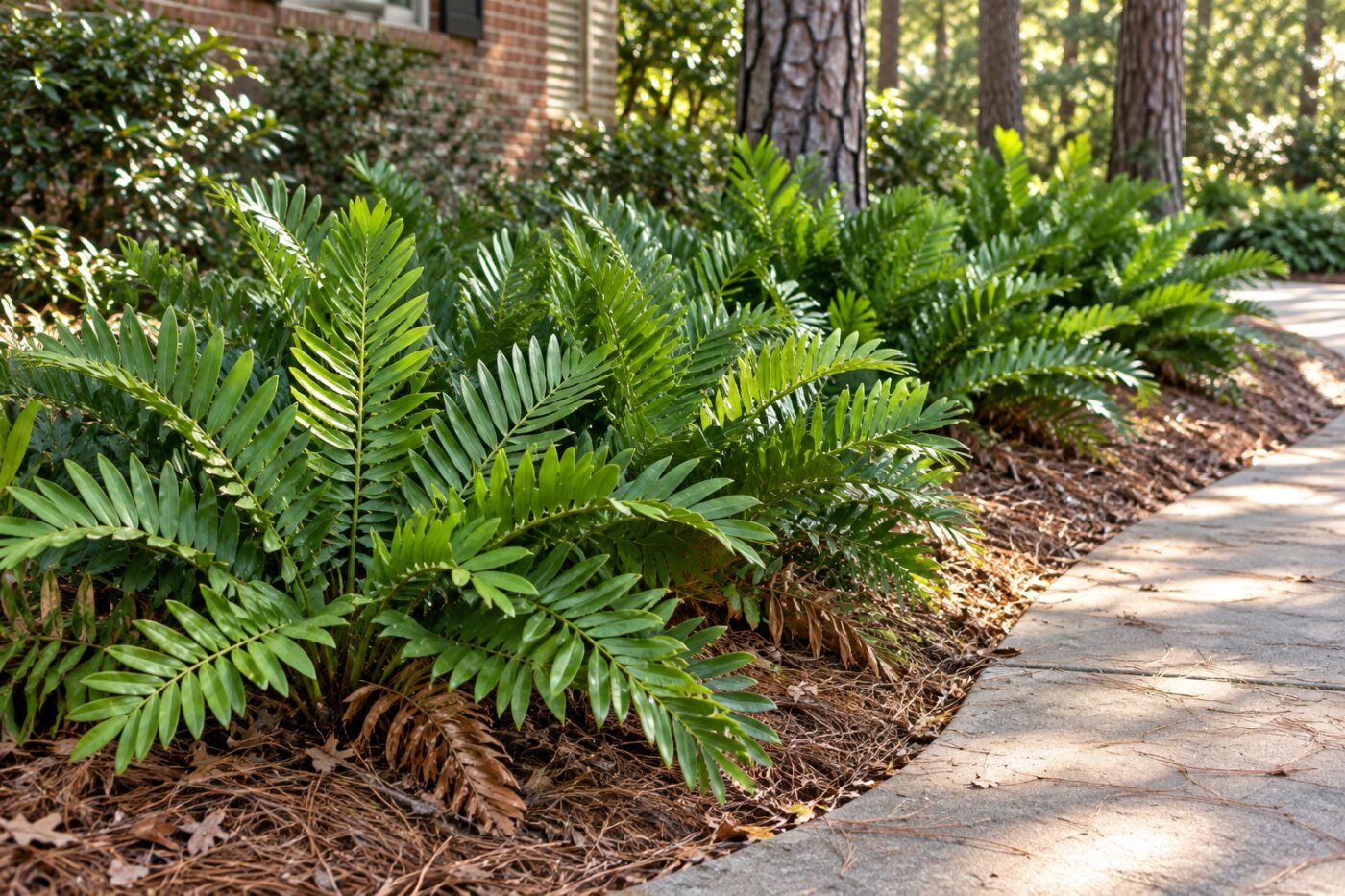
Coontie palm care is simple once you know what this Florida native wants: good drainage, a little shade and very little fuss. In this guide we cover light, soil, spacing, watering, pests, the Atala butterfly connection and an honest toxicity warning, so you can decide where a coontie fits in your yard.
Coontie palm care at a glance:
| Feature | Details |
|---|---|
| Botanical name | Zamia integrifolia (also called Florida arrowroot) |
| Plant type | Evergreen native cycad, not a true palm |
| Mature size | About 1 to 3 feet tall and 3 to 5 feet wide |
| Growth rate | Slow |
| Light | Part shade is ideal; tolerates full sun to shade |
| Soil | Well-drained, sandy or loamy soil |
| Water | Drought tolerant once roots settle in |
| Salt tolerance | Moderate |
| USDA zones | 8b to 11 (UF/IFAS); 8a in sheltered spots |
| Toxicity | All parts are poisonous to people and pets |
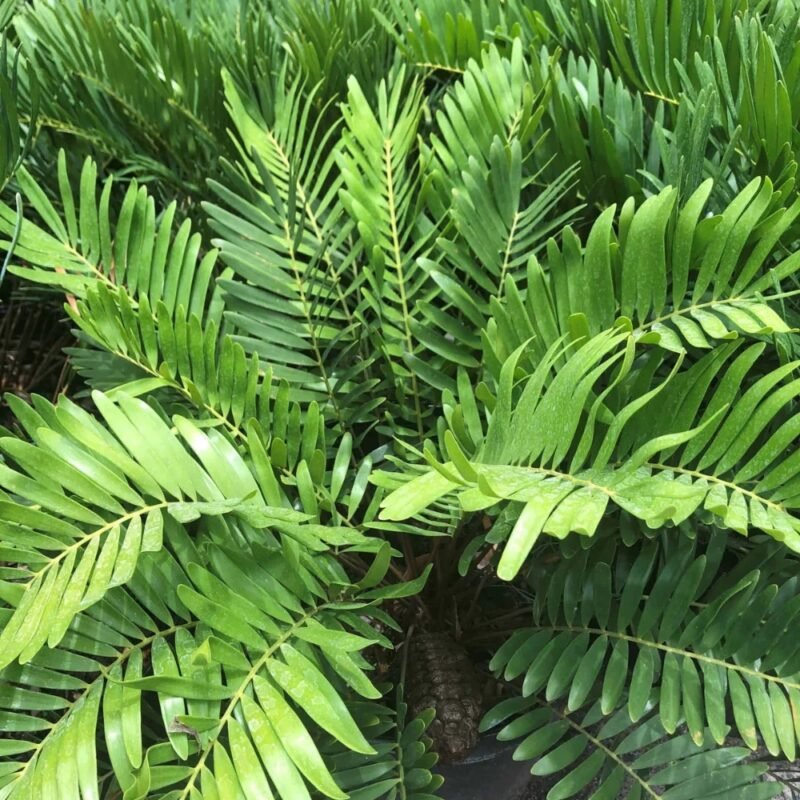
What Is a Coontie Palm?
Despite the name, coontie is not a palm at all. It is a cycad, an ancient group of plants that makes cones instead of flowers. In fact, it is the only cycad native to the continental United States. A thick stem sits mostly underground, and stiff, glossy fronds rise from it to form a neat, rounded mound.
Coontie also has a long human history. The Timucua and Calusa people made flour from its starchy stem, but only after washing out the toxins. That history is a good reminder that this plant is beautiful, tough and poisonous all at once.
Plants are either male or female. Male plants carry narrow brown cones, while female plants form broader cones that split to show bright orange-red seeds. So if you want seeds, you need both sexes nearby.
Light: Sun or Shade?
According to UF/IFAS Gardening Solutions, coontie grows best in some shade but can tolerate full sun or shade. That flexibility is one of its biggest selling points. For example, it works under tall pines and oaks, along a north wall, or in an open bed.
Plants in bright, filtered light usually look the fullest and greenest. In hot, full sun, the fronds stay shorter and can look a bit more yellow-green. In deep shade, growth slows even further and the clump stays more open. As a result, morning sun with afternoon shade is the easiest setup for coontie palm care in most yards.
Soil, Planting and Spacing for Coontie Palm Care
Drainage matters more than anything else in coontie palm care. Coontie thrives in sandy, well-drained soil, which is why it suits so much of Florida. However, it rots in soggy ground, so skip low spots where water sits after a storm. If your soil holds water, plant on a slight mound or in a raised bed.
When you plant, follow these steps:
- Dig wide, not deep. Make the hole about twice as wide as the root ball and no deeper.
- Set it high. Keep the top of the root ball level with, or slightly above, the soil around it.
- Backfill and water. Use the native soil, then soak the area to settle out air pockets.
- Mulch lightly. Add 2 inches of mulch, but keep it a few inches away from the crown to prevent rot.
A small amount of organic matter in very poor sand can help, and UF notes that a soil pH of about 6.0 or higher supports healthy plants. After that, the plant asks for very little.
How Many Plants Do You Need?
UF/IFAS suggests spacing coonties 3 to 5 feet apart for specimen and mass plantings. Meanwhile, a UF fact sheet on coonties as a groundcover recommends a much closer 12 to 20 inches, because the plants grow so slowly. Here is a quick planning table:
| Goal | Spacing | Plants per 10-foot row | Plants per 100 sq ft |
|---|---|---|---|
| Dense groundcover | 18 inches | 7 | About 44 |
| Low border or edging | 2 feet | 5 to 6 | About 25 |
| Mass planting | 3 feet | 4 | About 11 |
| Specimen clumps | 4 to 5 feet | 2 to 3 | 4 to 6 |
Since coontie is slow, closer spacing fills a bed years sooner. That is also why multi-plant bundles make sense for borders and mass plantings.
Watering and Fertilizing a Coontie Palm
New plants need regular water while roots spread. Water every two to three days for the first few weeks, then taper to once or twice a week for the first few months. After that, UF says coontie rarely needs water, because it is highly drought tolerant.
In coontie palm care, overwatering is the more common mistake. Disease problems show up when irrigation runs too often, especially when wet mulch touches the crown. So if your lawn sprinklers hit the bed daily, adjust the heads or plant the coontie elsewhere.
Coontie also has low fertilizer needs. A light feeding of slow-release fertilizer in spring is plenty for most plants, and many established coonties need none at all. Instead of feeding more, focus on drainage and patience.
How Fast Does It Grow?
Slowly. A UF fact sheet notes that nurseries need about five years to grow a coontie to a typical retail size. Most plants add only a few new fronds each year, usually in one flush in spring or early summer.
That slow pace is part of the appeal, though. A coontie rarely outgrows its spot, never needs shearing and keeps its shape for decades. Just plan your expectations around years, not months, and you will be happy with good coontie palm care results.
Pruning and Seasonal Coontie Care
There is almost no pruning. Simply cut off old fronds once they turn fully brown, cutting close to the base. Leave green or partly green fronds in place, since they still feed the plant.
In winter, coontie handles North Florida cold well. A UF fact sheet reports that it survives winter lows of about 15°F, and the underground stem helps it recover even if fronds get damaged. If a hard freeze browns the foliage, wait until spring before trimming, then watch for new growth from the center.
Pests, Problems and the Atala Butterfly
Pest control is a small part of coontie palm care, but scale insects and mealybugs can show up. UF lists Florida red scale, hemispherical scale and longtailed mealybugs as the usual culprits. Look for irregular yellow patches on fronds or small bumps on the leaf undersides. Then treat with insecticidal soap or horticultural oil, and check again in a couple of weeks.
The other “pest” is actually a reason many people plant coontie. It is the larval host of the rare Atala butterfly, whose caterpillars are bright red with two rows of yellow spots. According to UF/IFAS EDIS, groups of these caterpillars can strip a mature coontie bare, yet healthy plants usually recover within one growing season.
To be honest, the Atala mainly lives in southeast Florida, from Palm Beach County south, with newer colonies in a few nearby counties. So gardeners in North Florida should not expect Atalas to appear. Even so, coontie is still a fine native choice there, and NC State also lists it as a host for the echo moth.
Toxicity: Keep Pets and Kids Safe
This is the most important safety point. The NC State Extension Plant Toolbox rates coontie as poisonous to people, dogs, cats and horses. The seeds, stems and sap are the riskiest parts, and NC State warns that eating just one or two seeds can be fatal. Symptoms include vomiting and liver failure.
Therefore, safe coontie palm care means thinking carefully before planting it where a dog digs or chews. Female plants are the bigger concern because of their bright seeds, so remove seed cones as they open if pets or small children share the yard. If you suspect a pet ate any part of the plant, call your veterinarian or a pet poison hotline right away.
Landscape Uses for a Coontie Palm
Because coontie palm care is so easy, the plant suits many spots. It stays low, stays green and tolerates both drought and moderate salt. Popular uses include:
- Foundation plantings along the front of a house, where it never blocks windows.
- Mass plantings and groundcover under pines or oaks, where grass struggles.
- Borders and edging along walkways and driveways, away from heavy foot traffic.
- Coastal yards set back from direct salt spray.
- Native and pollinator gardens, paired with plants like dune sunflower and wax myrtle.
For more low-water ideas, browse our drought tolerant plants and groundcovers and border plants.
What Arrives When You Order
Our live coontie starter plants ship under 12 inches tall, potted with the root plug of soil intact and wrapped to hold moisture. Because coontie grows so slowly, expect a young plant with a few fronds, not a full mound. With steady early watering, good drainage and basic coontie palm care, it will fill out over the next several seasons.
Bundles of several plants lower the cost per plant, which helps with borders and groundcover beds. Most orders ship free by USPS First-Class within the United States, and we may hold orders during freezing or extreme heat for plant safety. Every order also comes with our 30-Day Happy Gardener Guarantee. Wondering whether small plants are worth it? Read buying starter plants online, then see what to do with your plants after they arrive.
Timing matters too. Coontie can go in the ground year-round in Florida, but cooler months mean less watering, so see our guide to fall planting in Florida.
Coontie Palm Care FAQ
Is a coontie palm a real palm?
No. Coontie is a cycad, related to sago palm, and it reproduces with cones. However, the stiff, divided fronds look palm-like, which explains the common name.
Can it take full sun?
Yes. It tolerates full sun as well as shade. That said, it usually looks lushest with some afternoon shade, especially in the first year.
Is coontie toxic to dogs?
Yes. All parts are toxic to dogs, cats and people, and the seeds are especially dangerous. Plant it away from pets that chew, and remove seed cones on female plants.
Does it spread?
Not aggressively. Each plant slowly widens into a clump about 3 to 5 feet across, and it is not invasive. Since it is a Florida native, there is no invasive-species concern in Florida landscapes.
Will it grow outside Florida?
Outdoors, stick to USDA zones 8b to 11, or a sheltered spot in zone 8a. In colder areas, grow it in a container and bring it inside for winter. Coontie palm care in a pot is the same, with a fast-draining mix and sparing water.
Bring a Florida Native Home
Good coontie palm care comes down to a few habits: plant in well-drained soil, give it some shade, water while it settles, and then mostly leave it alone. In return, you get a tidy evergreen that handles drought, heat and moderate salt for decades. Just respect its toxicity around pets. When you are ready, order coontie starter plants from our nursery, or explore more shrubs and bushes for your landscape.