
Evergreen Shrubs for Zone 8: Year-Round Color That Thrives

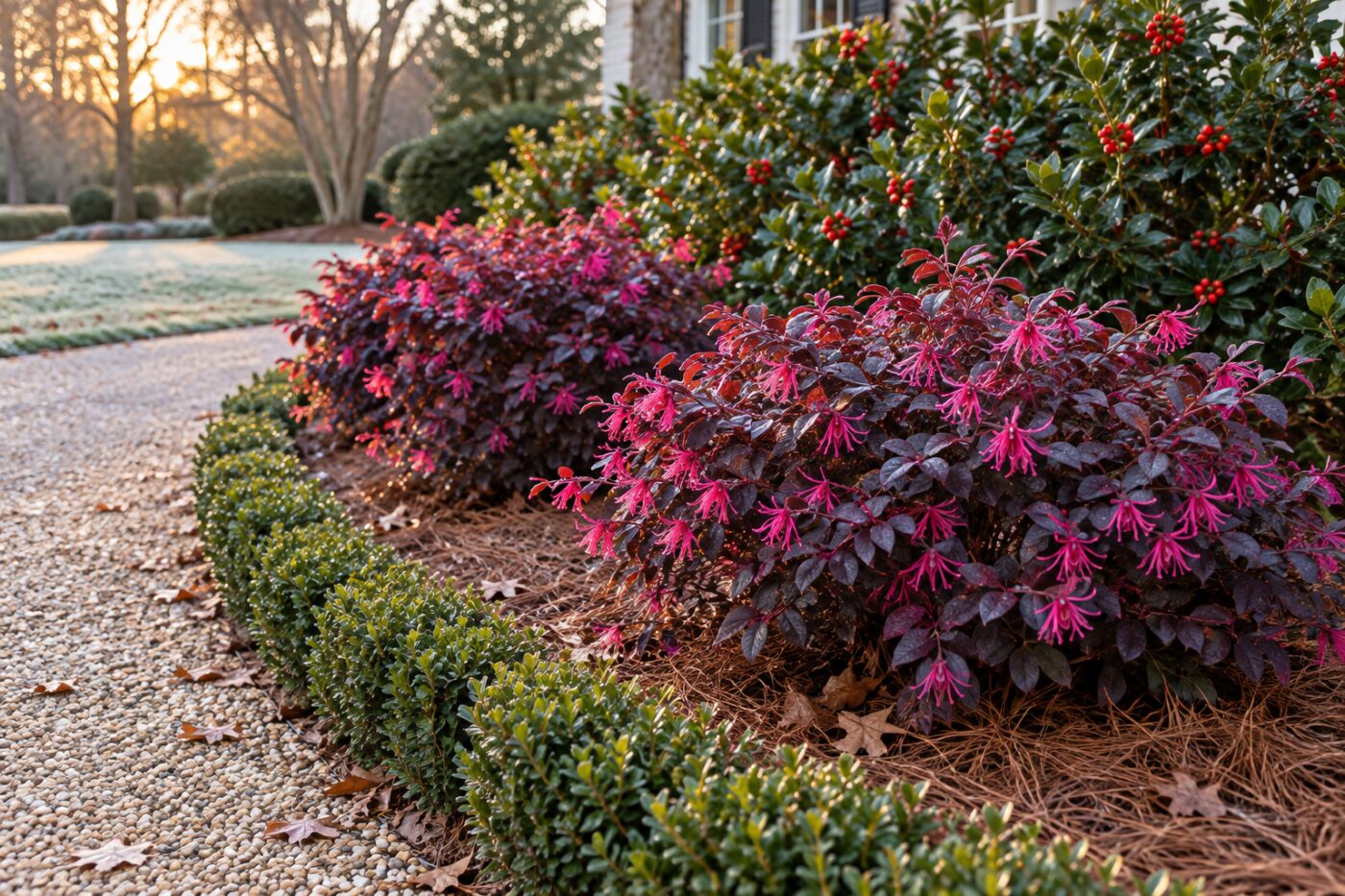
The best evergreen shrubs for zone 8 handle winter lows in the teens, then shrug off long, humid summers. Below we compare seven proven picks by size, sun, spacing and real downsides, so you can match the right shrub to each spot in your yard.
Quick answer: our top seven for zone 8
- Tall formal screen: Podocarpus (yew pine), best in zone 8b.
- Year-round color: Ruby loropetalum, with burgundy leaves and pink blooms.
- Winter berries: Needlepoint holly, a glossy hedge with red fruit.
- Low clipped edging: Japanese boxwood.
- Fragrance: Frostproof gardenia.
- Winter flowers: Viburnum ‘Spring Bouquet’ (laurustinus).
- Fast native screen: Wax myrtle.
What Zone 8 Means for Evergreen Shrubs
USDA zone 8 covers places where the coldest night of an average winter falls between 10 and 20 degrees F. Zone 8a dips to 10 to 15 degrees, while 8b bottoms out at 15 to 20. That five-degree gap matters, because several popular shrubs are rated only to 8b. For example, North Florida, South Georgia, coastal Carolina, much of Texas and the Pacific Northwest all fall in zone 8.
Cold is only half the story, though. In the Southeast, summer heat, humidity and sandy or clay soil decide which plants thrive. So the evergreen shrubs for zone 8 on this list were chosen for both: they take a hard freeze and they hold up through August. Here in Jacksonville we sit in 9a, just south of the line, so we grow these plants in similar conditions.
Zone 8 Evergreen Shrubs Compared
Use this table to narrow your shortlist. Sizes are typical unpruned heights, and every plant can be kept smaller with regular trimming.
| Shrub | Typical size | Sun | Hedge spacing | Best for |
|---|---|---|---|---|
| Podocarpus | 8 to 15 ft as a shrub (tree form taller) | Sun to part shade | 2 to 3 ft | Formal privacy hedge |
| Ruby loropetalum | 4 to 6 ft, can reach 10+ ft | Sun to part shade | 3 to 4 ft | Color, foundation beds |
| Needlepoint holly | 10 to 15 ft or more | Sun to part shade | 4 to 5 ft | Screens, winter berries |
| Japanese boxwood | 2 to 6 ft, usually sheared | Part shade to sun | 1.5 to 2 ft | Edging, low hedges |
| Frostproof gardenia | 3 to 5 ft | Sun to part shade | 3 ft | Fragrance near patios |
| Viburnum ‘Spring Bouquet’ | 6 to 10 ft | Sun to part shade | 3 to 4 ft | Winter bloom, mid-size hedge |
| Wax myrtle | 10 to 20 ft | Sun to part shade | 4 to 6 ft | Fast, informal native screen |
If you need a row of any of these, our hedge spacing chart and calculator turns your length in feet into a plant count.
7 Best Evergreen Shrubs for Zone 8
Each pick below includes what it does well, where it struggles, and how we would use it. We also note any toxicity, because pets and kids share most yards.
1. Podocarpus (yew pine)
Podocarpus macrophyllus makes a dense, upright, deep green hedge that takes shearing well. According to the UF/IFAS fact sheet on Podocarpus macrophyllus, it has high salt tolerance, few serious pests and a slow growth rate. However, UF rates it for zones 8b to 11, even though many nursery labels, including ours, list zone 7. So in colder 8a yards, plant it against a south or east wall where it gets some shelter. Also, the seeds are toxic, so keep them away from children and pets. For more detail, see our podocarpus spacing and pruning guide.
2. Ruby loropetalum
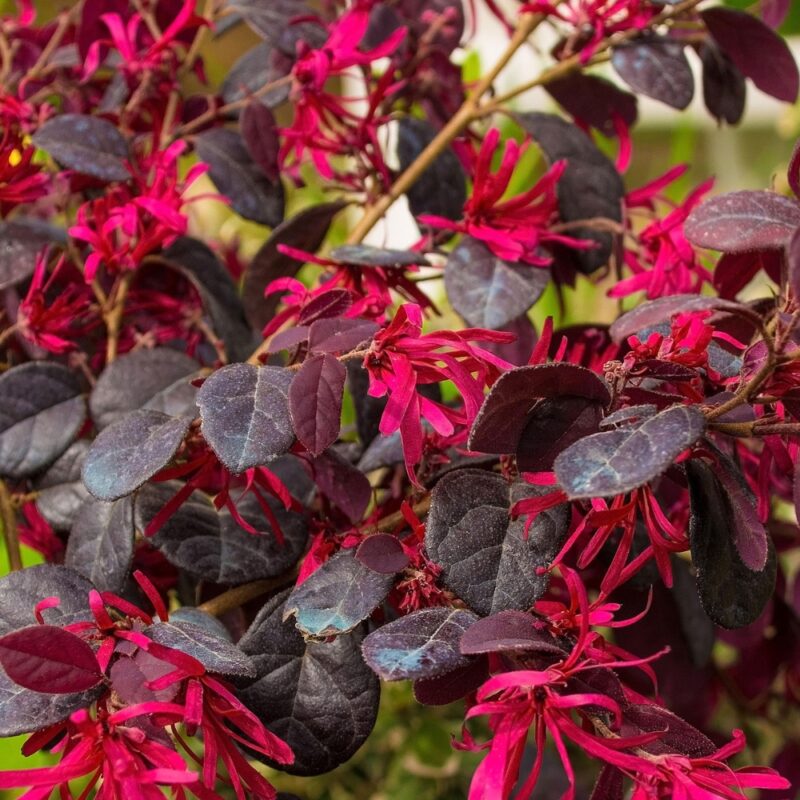
Ruby loropetalum is the color pick. Its burgundy foliage holds all winter, and hot-pink fringe flowers arrive in late winter and spring, with lighter repeat blooms later. Clemson Extension rates loropetalum for zones 7b to 9b and suggests pruning, if needed, right after spring bloom. That said, labels often understate its size. The Clemson HGIC loropetalum guide lists ‘Ruby’ at up to about 12 feet tall unpruned, so give it room or plan on yearly trimming.
3. Needlepoint holly
Needlepoint holly (Ilex cornuta) has glossy leaves with a single spine at the tip, so it is far friendlier to handle than most hollies and other zone 8 shrubs with spines. Bright red berries hold into winter, and birds and bees both visit. NC State Extension rates it for zones 7a to 9b and notes it can reach 15 feet or more if left alone. Their Needlepoint holly plant profile also flags chlorosis in high-pH soil, so it does best in neutral to acidic ground. In addition, the berries are mildly toxic if eaten.
4. Japanese boxwood
Japanese boxwood is the classic pick among zone 8 evergreen shrubs for low, clipped edges, knot gardens and small globes. It handles heat better than English boxwood, and deer and rabbits generally leave it alone. Even so, it dislikes wet feet, and stressed plants attract boxwood mites and leaf miners. In hot zone 8 summers, morning sun with afternoon shade keeps the leaves greener. Our product page lists zones 6 to 9, so it fits all of zone 8.
5. Frostproof gardenia
Most gardenias lose their buds to late frosts, which is why Frostproof gardenia earned its name. It stays compact at about 3 to 5 feet and fills late spring with sweet, white double blooms. Gardenias need acidic, well-drained soil, and UF/IFAS lists a pH of 5.0 to 6.5 as ideal. Meanwhile, watch for whiteflies, scale and sooty mold in humid weather. The ASPCA also lists gardenia as toxic to cats and dogs, though symptoms are usually mild.
6. Viburnum ‘Spring Bouquet’ (laurustinus)
Viburnum ‘Spring Bouquet’ blooms when little else does, opening pink buds into white flowers from late winter into spring. Blue-black berries follow for the birds. NC State lists laurustinus for zones 8a to 10b and calls it deer, drought and salt tolerant. Because it comes from the Mediterranean, it wants good drainage and air flow; crowded, wet sites invite leaf spot and powdery mildew.
7. Wax myrtle
Wax myrtle is the fastest shrub on this list and a true Southeastern native. It grows in wet or dry soil, handles salt spray, and feeds birds with its waxy gray berries. On the other hand, it can sucker into thickets, it drops some leaves after a hard freeze, and the aromatic foliage is flammable. As a result, keep it away from the house in wildfire-prone areas. Our wax myrtle screen guide covers spacing and pruning in depth.
Picking Evergreen Shrubs for Zone 8 by Spot
Once you know the zone fits, match your evergreen shrubs for zone 8 to the job. This shortcut keeps you from planting a 15-foot holly under a 4-foot window.
- Under windows and along walks: Japanese boxwood or Frostproof gardenia.
- Foundation corners: Ruby loropetalum or Viburnum ‘Spring Bouquet’.
- Privacy along a property line: podocarpus, Needlepoint holly or wax myrtle.
- Coastal yards with salt spray: podocarpus, wax myrtle or laurustinus.
- Deer pressure: boxwood, holly and laurustinus, as covered in our guide to shrubs deer usually skip.
For a tall screen, also compare our list of fast growing privacy hedge plants. If your yard sits in warmer 8b, sweet viburnum is another strong option, and our sweet viburnum vs podocarpus comparison helps you choose.
Two more zone 8 shrubs worth a look
In the upper South, Little Giant arborvitae forms a neat green globe and is rated to zone 8, although it prefers cooler summers than Florida offers. Meanwhile, Red Formosa azalea gives a big spring show in light shade and acidic soil, then stays evergreen the rest of the year.
When and How to Plant in Zone 8
Fall is the best time to plant evergreen shrubs for zone 8. Soil stays warm while the air cools, so roots grow all winter before summer stress arrives. Early spring works too, but you will water more often through the first summer. Our fall planting guide has a month-by-month list for the Southeast.
- Check drainage first. Dig a hole, fill it with water, and make sure it drains within a few hours.
- Plant at the same depth. Keep the top of the root ball level with the soil, never deeper.
- Mulch 2 to 3 inches deep. Then pull mulch a few inches back from the stems.
- Water on a schedule. Water every two to three days for the first few weeks, then taper off as new growth appears.
- Hold the fertilizer. Wait until you see new growth, then feed lightly in spring.
Protecting young shrubs in a hard freeze
Established evergreen shrubs for zone 8 rarely need help. However, first-winter plants benefit from a little care. Water the day before a freeze, because moist soil holds heat better than dry soil. Then cover small plants with a frost cloth or an old sheet that reaches the ground, and remove it once temperatures rise. Avoid plastic touching the leaves, since it can make freeze damage worse.
What Arrives When You Order
We want you to know exactly what to expect. Our evergreen shrubs for zone 8 all ship the same way. Every plant arrives as a live, rooted starter under 12 inches tall, potted with its soil plug intact rather than bare-root, and wrapped to hold moisture. In other words, you are buying a young plant that grows into the sizes above, not an instant hedge.
Starter plants cost far less per plant and often settle in quickly, which is why they suit long hedges. In addition, bundles of several plants lower the per-plant price. Shipping is free by USPS First-Class on most orders, and we may hold orders during freezes or extreme heat. If you are weighing size against price, read our post on whether small starter plants are worth it. Then follow our care steps after your plants arrive. Every order also carries our 30-Day Happy Gardener Guarantee.
Evergreen Shrubs for Zone 8 FAQ
What evergreen shrubs stay green all year in zone 8?
Podocarpus, Needlepoint holly, Japanese boxwood, Frostproof gardenia and laurustinus all hold their leaves through a typical winter. Ruby loropetalum stays burgundy instead of green. Wax myrtle may drop some leaves after a very hard freeze, but it recovers in spring.
What is the fastest growing evergreen shrub for zone 8?
Wax myrtle is the fastest of these seven, and it can add several feet a year once settled. For a faster formal look in 8b, consider sweet viburnum. By contrast, podocarpus and boxwood grow slowly.
Which zone 8 evergreen shrubs handle shade?
Japanese boxwood, laurustinus and podocarpus tolerate part shade well. Gardenias and loropetalum also accept part shade, although they bloom less. Deep, all-day shade slows every shrub on this list.
When should I plant shrubs in zone 8?
Fall, from about October through early December, is ideal. Late winter and early spring also work if you water through the first summer.
Are any of these evergreen shrubs toxic to pets?
Yes, several are. Podocarpus seeds, holly berries, boxwood leaves and gardenia all carry some toxicity. So if you have a dog that chews plants, place these away from its usual paths.
Choose Your Zone 8 Shrubs
The right evergreen shrubs for zone 8 give you structure in January and color in spring, with little fuss once established. First, match the zone, then the spot, then the mature size. After that, browse our shrubs and bushes or the full zone 8 plant collection to build your list. If you have questions, call us at (904) 664-5227 and we will help you pick.