
Confederate Jasmine on a Fence: How to Grow a Fragrant Living Screen

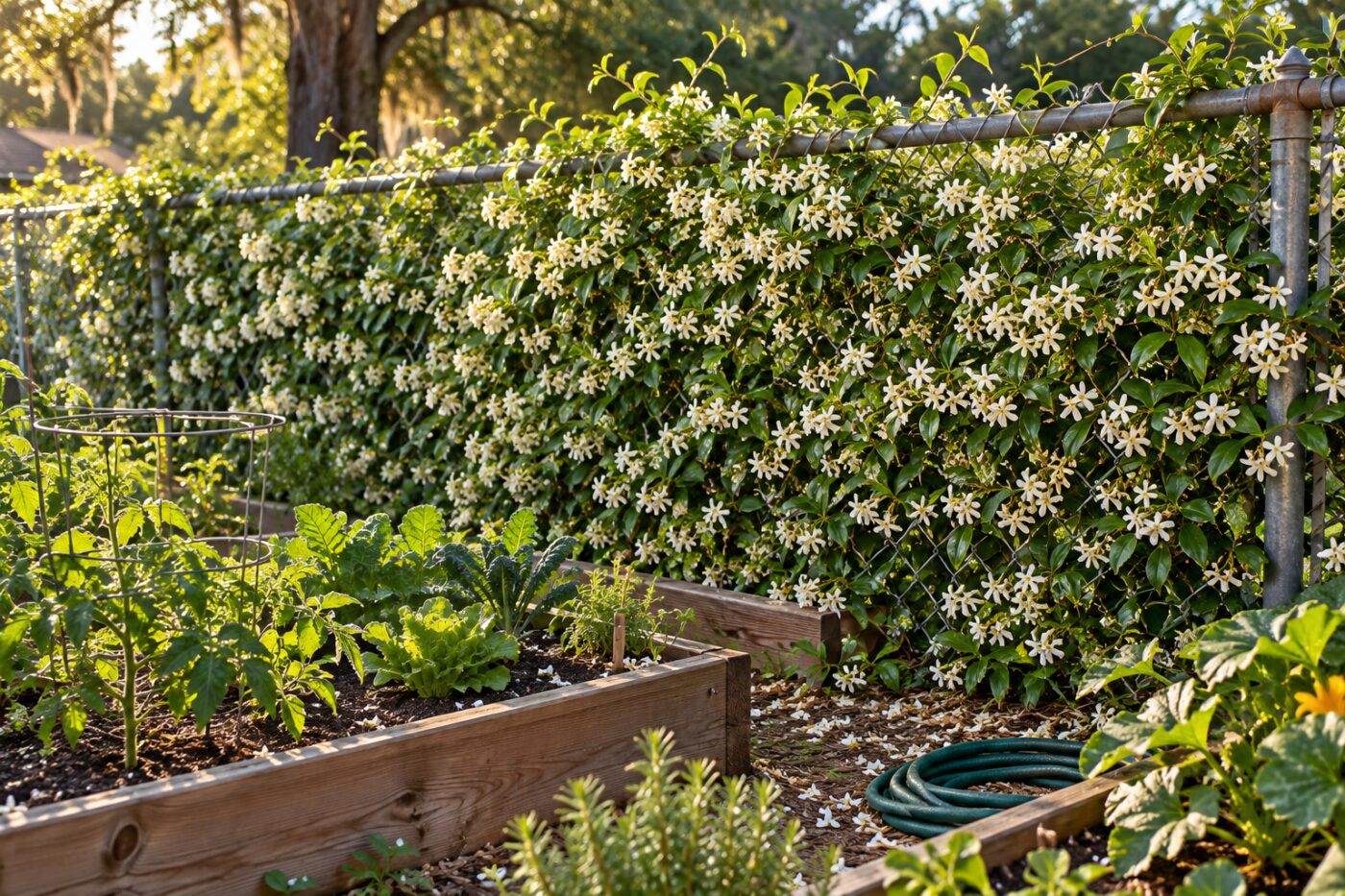
Growing confederate jasmine on a fence is one of the easiest ways to turn bare chain link or plain boards into a green, fragrant screen. Below we cover how far apart to plant, how to train the vines, how long coverage takes, and what to expect from small starter plants.
Quick answer: key facts
- Plant: Trachelospermum jasminoides, an evergreen twining vine native to China, not the Southeast.
- Hardiness: USDA zones 8 to 10, with leaf damage possible in hard freezes at the cold edge.
- Height: 20 feet or more unpruned, so a 6-foot fence is easy for it to cover.
- Spacing on a fence: about 3 to 5 feet apart, with 4 feet a good middle ground.
- Bloom: heavy, fragrant white flowers in spring, then scattered blooms into summer.
- Coverage time: usually two to three growing seasons from young plants in warm zones.
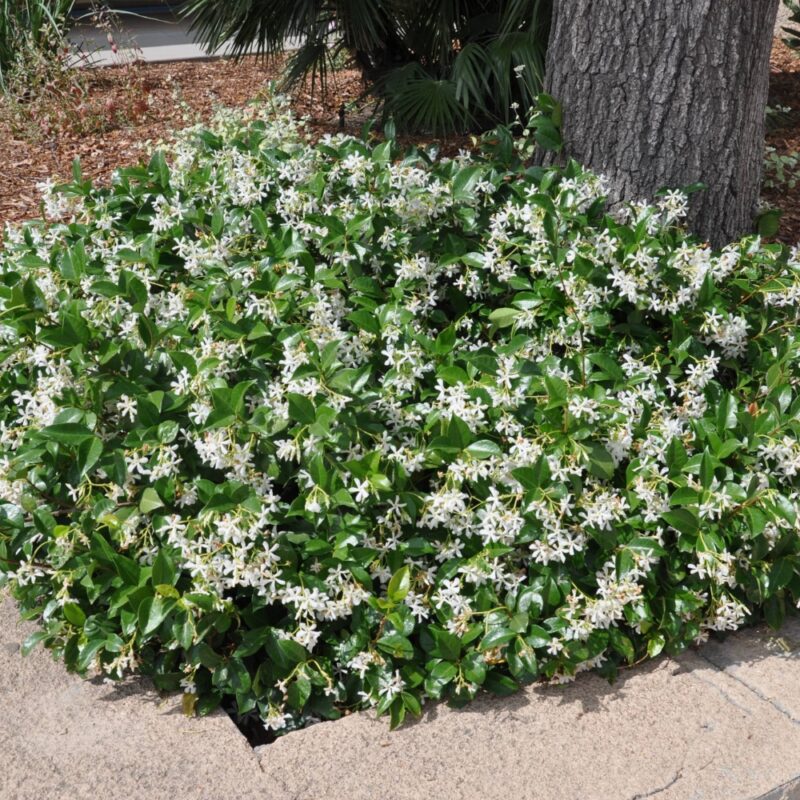
Why Confederate Jasmine Works on a Fence
Confederate jasmine climbs by twining. Its stems wrap around anything thin enough to grip, such as wire, lattice or a post. That makes chain link close to perfect, because every diamond in the mesh is a handhold. In addition, the small, glossy leaves stay on all year, so the screen does not vanish in winter the way a deciduous vine would.
It also brings fragrance. According to UF/IFAS Gardening Solutions, the pinwheel-shaped white flowers are strongly scented, and the vine flowers best in full sun. The same page notes it is relatively pest free and drought resistant once settled. For a fence near a patio or a bedroom window, that spring scent is the main reason people choose it.
Finally, it is honest to mention the downsides. The vine is not native, the milky sap is sticky, and it needs trimming a few times a year to stay neat. We cover each of these below.
Which Fences It Climbs Best
Not every fence gives a twining vine something to hold. So before you plant, look at the surface the stems will meet.
| Fence type | Will it climb alone? | What to add |
|---|---|---|
| Chain link | Yes, easily | Nothing, just weave the first stems in |
| Wood picket or split rail | Partly, around posts and rails | Wire or string between rails |
| Solid wood privacy fence | No | Horizontal wires or a lattice panel |
| Vinyl privacy fence | No | Freestanding trellis set slightly off the fence |
| Masonry or block wall | No | Trellis, wire on anchors, or mesh |
UF/IFAS points out that the vine will not climb masonry unless you add a support, and the same applies to smooth vinyl and flat boards. For a solid fence, run galvanized wire horizontally every 12 to 18 inches, held 2 to 4 inches off the boards with eye screws. That gap lets air move behind the leaves, which also helps the wood dry after rain.
How Far Apart to Plant Confederate Jasmine on a Fence
For a vine trained along a fence, a spacing of about 3 to 5 feet works well. A UF/IFAS Extension article from Charlotte County suggests roughly 4 feet between vines for full coverage. Closer spacing, around 3 feet, fills in a season sooner, while 5 feet saves plants if you can wait.
Use this chart to count plants for a run of fence:
| Fence length | 3 ft spacing | 4 ft spacing | 5 ft spacing |
|---|---|---|---|
| 20 ft | 7 plants | 5 plants | 4 plants |
| 40 ft | 13 plants | 10 plants | 8 plants |
| 60 ft | 20 plants | 15 plants | 12 plants |
| 100 ft | 33 plants | 25 plants | 20 plants |
The math is simple: divide the fence length by the spacing. Then add one plant if you want a vine right at each end. For shrubs instead of vines, our hedge spacing chart and calculator works the same way.
Planting Step by Step
- Pick the sunny side. Full sun gives the most flowers, although part shade still produces a good screen.
- Check drainage. The vine likes well-drained soil, so avoid low spots where water stands after storms.
- Plant 8 to 12 inches out from the fence. This keeps roots out of the dry strip right at the base and away from footings.
- Set the plant at the same depth it grew in its pot, then firm the soil and water deeply.
- Lean it in. Tie or weave the longest stem onto the fence so it knows where to go.
- Mulch 2 to 3 inches deep, keeping mulch off the stems.
Next, water every two to three days for the first few weeks unless it rains, then taper off as new growth appears. Our guide on what to do with your plants after they arrive walks through the first week in more detail.
Training Confederate Jasmine on a Fence
Young vines often send up one or two long stems and little else. If you let them run straight up, you get a tall, thin plant with bare legs. Instead, guide stems sideways along the lower wires or mesh first, then let side shoots climb.
- Pinch the tips. UF/IFAS notes that pinching back the tips encourages branching and fuller plants.
- Weave weekly in the growing season. Tuck wandering tips back into the fence before they flop onto the lawn.
- Fan the stems. Spread them in a loose fan so each plant covers its own section.
- Use soft ties such as garden tape on wire, and avoid anything that cuts into the bark.
Once the vines meet in the middle, your job shifts from training to trimming.
How Fast Does It Cover a Fence?
Confederate jasmine is often slow to get started, then vigorous. A UF/IFAS Nassau County fact sheet describes it in just those terms. NC State Extension’s plant toolbox entry lists it as a rapid grower, reaching 3 to 20 feet depending on support.
In practice, expect roots to settle during the first season, with modest top growth. Then the second season usually brings long new runners, and the third season fills most gaps on a well-spaced fence. Warmer zones, full sun and steady water speed things up. Meanwhile, cold winters at the northern edge of its range can set growth back.
So if you need privacy this year, plant closer, at about 3 feet. Alternatively, pair the fence with shrubs from our list of fast growing privacy hedge picks.
Bloom Time and Fragrance
The main show comes in spring. In Florida, UF/IFAS Extension describes flowers produced abundantly in April and May, while farther north the peak runs into early June. After that, expect light, scattered blooms through summer.
Because the vine blooms on growth made the previous year, heavy cutting in late winter removes the flower buds. For the best scent next spring, do your main trim right after flowering instead.
Pruning Confederate Jasmine on a Fence
Plan on two or three trims a year once the screen is full. First, cut back right after the spring bloom to shape the face and top. Then do lighter passes in summer to remove stems reaching past the fence line.
- Keep it off the top rail. Heavy growth on top can sag gates and lean older wood fences.
- Keep it out of trees. UF/IFAS warns that stems can climb into trees, where pruning gets hard.
- Wear gloves and old clothes. The milky sap is sticky, can stain clothing and may irritate skin.
- Clean your shears after each session, because the sap gums up blades.
Care, Cold and Common Problems
Once established, the vine is fairly low maintenance. That said, a few issues are worth watching:
- Scale and sooty mold. Black film on the leaves usually means scale insects. UF/IFAS Extension suggests insecticidal soap or horticultural oil, applied outside the hottest part of the day.
- Cold damage. In zone 8, a hard freeze can brown leaves or kill back stems. Usually the plant regrows from older wood in spring.
- Water. It is moderately drought tolerant once rooted, but new plants need regular water for their first season.
- Fertilizer. A light spring feeding is plenty, because too much nitrogen pushes leaves over flowers.
NC State lists it as deer resistant, salt tolerant and non-toxic to cats, dogs and horses. For more plants deer tend to leave alone, see our deer resistant shrubs guide.
Is Confederate Jasmine Invasive in Florida?
No. The UF/IFAS Assessment of Non-native Plants rates Trachelospermum jasminoides as not a problem species in north, central and south Florida. In other words, it is non-native but not considered a threat to natural areas. Even so, it will spread across the ground if you let it, so keep stems trained up rather than into beds.
If you want a low jasmine for the ground under the fence instead, Summer Sunset Asiatic jasmine is a separate species grown for colorful leaves rather than flowers.
What Arrives When You Order
Our live Confederate Jasmine plants ship as rooted starter plants under 12 inches tall. Each one comes potted with its root plug of soil intact, then wrapped to hold moisture. They are young vines, not instant screens, so set expectations around the two to three season timeline above.
- Bundles: buying several plants together lowers the cost per plant, which matters for a long fence.
- Shipping: free USPS First-Class on most orders, within the United States, processed in 2 to 5 business days.
- Weather holds: we may hold orders during freezing or extreme heat to protect the plants.
- Guarantee: our 30-Day Happy Gardener Guarantee covers you. Contact us within 48 hours with photos if a plant arrives damaged.
Fall is a good time to plant in much of Florida, as our guide to fall planting in Florida explains. If you are new to mail-order starters, read whether small plants are worth it first.
Confederate Jasmine on Fence FAQ
How long does confederate jasmine take to cover a fence?
Usually two to three growing seasons from young plants spaced about 4 feet apart. The first year mostly builds roots, then growth speeds up.
How far apart should I plant confederate jasmine on a fence?
Plant about 3 to 5 feet apart. Four feet is a reliable middle ground, while 3 feet closes gaps faster.
Will confederate jasmine climb a wood or vinyl fence?
Not on flat boards or smooth vinyl by itself. However, it climbs readily once you add wires, lattice or a trellis.
Does confederate jasmine damage fences?
The twining stems do not dig into wood the way clinging roots do. Still, heavy growth adds weight and holds moisture, so trim the top and keep air moving behind the leaves.
Is confederate jasmine safe for dogs?
NC State Extension lists it as non-toxic to cats, dogs and horses. Even so, the sap can irritate skin, so wear gloves when pruning.
When should I prune confederate jasmine?
Prune right after the spring bloom. Then do light trims in summer as needed, and skip heavy late-winter cuts that remove flower buds.
Start Your Fragrant Fence
A row of confederate jasmine on a fence gives you year-round green, a strong spring scent and a screen that only needs a few trims a year. Start with good spacing and patient training, and the vines will meet within a few seasons. When you are ready, browse our Confederate Jasmine starter plants or see more options in our privacy hedge collection.