
Aztec Grass Care: Variegated Liriope for Borders and Edging

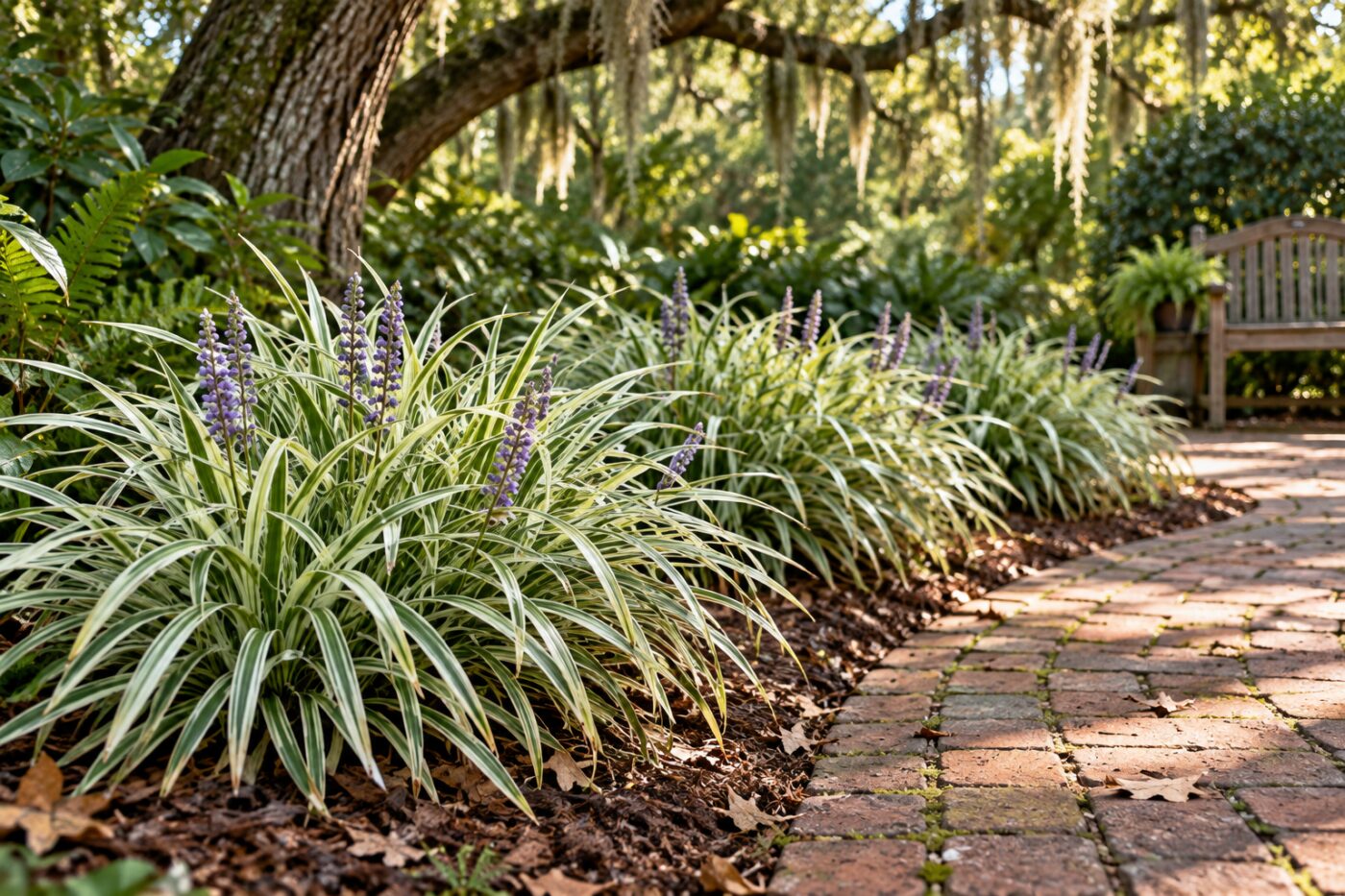
Aztec grass care is simple once you know three things: where to plant it, how far apart to set it, and when to cut it back. In this guide we cover light, water, spacing, a plant-count table for borders, and the honest downsides, so you can edge a bed or path with confidence.
Aztec grass at a glance:
| Feature | Details |
|---|---|
| Botanical name | Liriope muscari ‘Aztec Grass’ (variegated lilyturf) |
| Mature size | About 1 to 2 feet tall, clumps slowly widen |
| Edging spacing | 6 to 12 inches apart |
| Light | Part shade is best; in Florida, about 4 to 6 hours of direct sun at most |
| Water | Low once established; needs well-drained soil |
| USDA zones | 7 to 10 on our product page (UF lists 6 to 10) |
| Flowers | Lavender spikes in late summer, then dark berries |
| Pets | Listed as non-toxic to dogs, cats and horses by the ASPCA |

What Is Aztec Grass?
Despite the name, Aztec grass is not a true grass. Instead, it is a clumping, evergreen lilyturf with strap-like leaves striped in green and creamy white. In late summer it sends up short lavender flower spikes, and dark berries follow. Because the foliage stays bright all year, it lights up dark corners where solid green plants disappear.
One note on names: nurseries sometimes apply “Aztec grass” to more than one variegated grass-like plant, including a variegated mondo grass relative. Ours is listed as Liriope muscari ‘Aztec Grass’, so the care below follows the liriope fact sheets.
Aztec Grass Care Basics: Light, Soil and Water
Good Aztec grass care starts with the right spot. According to the UF/IFAS fact sheet on Aztec grass, it prefers shade but tolerates sun. However, in zones 9 through 11 UF recommends no more than 4 to 6 hours of direct sun. So in most of Florida, morning sun with afternoon shade gives the cleanest stripes.
Light
Too much hot sun can scorch the cream edges and leave brown tips. On the other hand, deep shade is fine, although growth slows. Here in North Florida, beds under high pines or on the east side of a house usually suit it well.
Soil and drainage
Drainage matters more than richness. Liriope handles acidic to alkaline soil, but it rots in soggy ground. If your bed holds water after rain, raise it a few inches or mix in compost first. That said, our sandy Florida soils usually drain well on their own.
Watering
Water new plants every two to three days for the first few weeks, then taper off as roots spread. Once established, it is moderately drought tolerant and only needs water during long dry spells. Also, water at the base rather than overhead, because wet leaves invite leaf spot.
Spacing Aztec Grass for Borders and Edging
UF/IFAS suggests 6 to 12 inches between plants. For a tidy edge that fills in within a season or two, we like about 8 to 10 inches. In contrast, 12 inches saves plants but takes longer to close. Over several years, a single clump can widen to about 2 feet, so do not crowd it against pavement.
Set the row about 6 to 8 inches back from the edge of a path or driveway. As a result, the arching leaves soften the hard line without spilling into foot traffic, since liriope does not handle being walked on.
How many Aztec grass plants do you need?
First, measure the length of your border in feet. Then divide by your spacing in feet and add one plant for the end of the row. Use the table below as a quick guide for a single row.
| Border length | 8 inches apart | 10 inches apart | 12 inches apart |
|---|---|---|---|
| 10 feet | 16 plants | 13 plants | 11 plants |
| 20 feet | 31 plants | 25 plants | 21 plants |
| 30 feet | 46 plants | 37 plants | 31 plants |
| 50 feet | 76 plants | 61 plants | 51 plants |
For a wider, double-row border, stagger the second row in a zigzag and roughly double the count. In mass plantings, figure about 1 plant per square foot at 12 inches, or about 2.25 per square foot at 8 inches. For hedges and other shrubs, our shrub spacing chart and calculator uses the same math.
Design Ideas for Variegated Lilyturf
Aztec grass works best where its stripes show against something darker. For example, try it along a shaded path, at the front of a foundation bed, or around the base of a tree. It also looks sharp against dark mulch, black pots or deep green shrubs.
- Edging: a single row along walks, patios and bed lines.
- Under trees: a ring of plants where lawn grass struggles in shade.
- Mass planting: a low, evergreen carpet on a gentle slope.
- Containers: a bright, trailing filler in shady pots.
It also has practical perks. Missouri Botanical Garden rates liriope as deer and rabbit resistant, so it pairs well with the plants in our guide to deer resistant shrubs. For more low options, see our roundup of Florida ground cover plants.
Aztec Grass Care Through the Year
Seasonal Aztec grass care takes only a few minutes a year. Here is a simple calendar for the Southeast.
Late winter: cut it back
Once a year, in late winter before new leaves emerge, trim off the old, tattered foliage. Clemson Extension’s liriope guide suggests a mower on its highest setting for large beds, or hand shears for small edges. Timing matters, because cutting after new shoots appear leaves chopped tips all season.
Spring: feed lightly
Next, apply one light dose of slow-release fertilizer in spring, as UF suggests. Too much feeding only pushes soft growth. Also, keep granules out of the leaf crowns so they do not burn.
Summer and fall
During summer, water only in drought and enjoy the flower spikes. Then, every three or four years, divide crowded clumps in fall or early spring if you want extra plants. Division is optional, though, since the plants stay healthy without it.
Common Aztec Grass Problems
In general, liriope has few serious pests. Even so, UF/IFAS notes a handful of issues worth watching:
- Scale insects: yellow spots on the upper leaves. Cut back badly infested foliage, then treat with horticultural oil.
- Anthracnose: reddish-brown speckles on leaf tips, usually from overhead watering. The yearly cutback removes most of it.
- Crown and root rot: yellow, collapsing clumps in wet soil. Improve drainage and remove affected plants.
- Slugs and snails: ragged holes in damp, shady beds.
- Brown, crispy edges: usually too much afternoon sun or drought stress, rather than disease.
Is liriope invasive in Florida?
This is the honest downside. The UF/IFAS Gardening Solutions page on liriope reports that the UF/IFAS Assessment lists Liriope muscari as a moderate invasion risk while it completes its evaluation. Unlike creeping lilyturf, Liriope spicata, it grows in clumps instead of running underground. Still, birds can spread the berries. So keep an eye on your planting, avoid placing it beside natural areas, and clip the spent flower stalks before berries ripen if you live near woods.
What Arrives When You Order Aztec Grass
We ship Aztec grass as live, rooted starter plants under 12 inches tall. Each one comes potted with its root plug of soil intact and wrapped to hold moisture, so it is ready to plant. These are young plants, not instant full clumps. With good Aztec grass care, they bulk up over the first year or two.
Because edging takes many plants, our multi-plant bundles lower the per-plant cost. Use the spacing table above to choose a bundle size, then order a few extras for gaps. Fall is a great time to plant in Florida, as our October and November planting guide explains. When the box lands, follow our tips on what to do after your plants arrive. If you are new to small plants, our post on buying starter plants online explains why they establish so well.
Aztec Grass Care FAQ
Does Aztec grass like sun or shade?
It prefers part shade. In Florida and other hot areas, limit it to about 4 to 6 hours of direct sun, ideally in the morning. Farther north, it handles more sun.
How fast does Aztec grass spread?
It spreads slowly to moderately. Instead of running, each clump widens over a few years, often to about 2 feet. So spacing plants 8 to 10 inches apart gives a solid edge sooner.
Should I cut back Aztec grass?
Yes, once a year in late winter, before new growth starts. This removes worn leaves and old leaf spot. Skip it, and the plants still live, but they look shabby.
Is Aztec grass safe for dogs and cats?
The ASPCA lists Liriope muscari as non-toxic to dogs, cats and horses. Even so, call your vet if a pet eats a large amount of any plant.
Is Aztec grass the same as mondo grass?
No, although the names overlap. Mondo grass has narrower leaves and smaller fruit, while liriope has wider, strap-like leaves and taller flower spikes. Both work as border grasses with similar care.
Bring Light to Your Borders
With the right spot, careful spacing and one trim a year, Aztec grass care stays easy, and your borders stay bright in shade. Start with a measured row, plant in fall or spring, and give the young plants a season to settle in. When you are ready, order Aztec grass starter plants or browse our full groundcovers and border plants collection.