
Sweet Viburnum vs Podocarpus: Which Privacy Hedge Is Right for You?

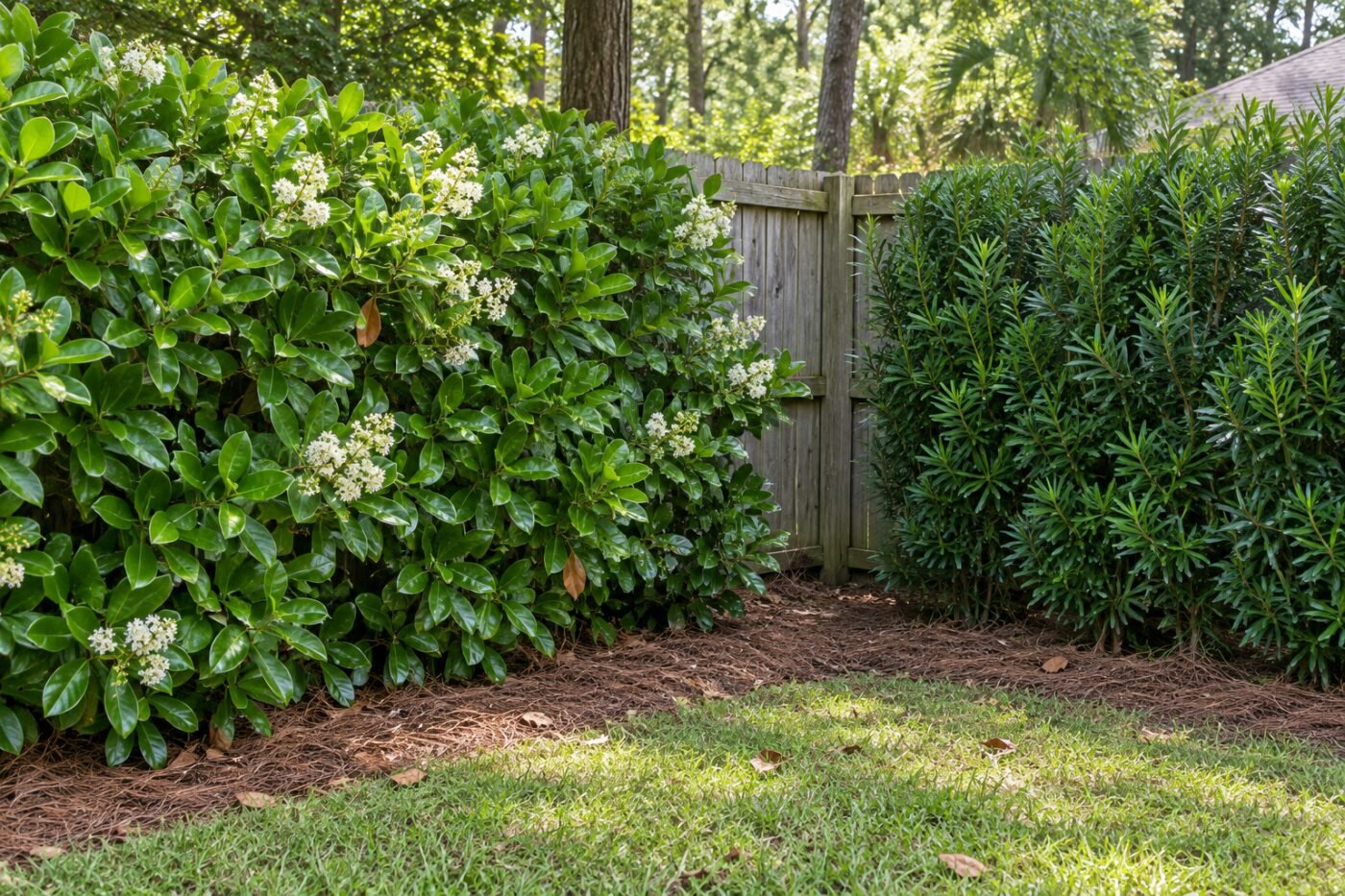
Sweet viburnum vs podocarpus is the most common hedge question we hear from Florida homeowners, and both plants deserve their reputation. In this guide we compare them side by side on speed, shade, drought, salt, width, upkeep and pests, so you can pick the right one for your fence line in a few minutes.
Quick answer:
- Choose sweet viburnum if you want privacy sooner, have a wide planting bed, and live inland away from salt spray.
- Choose podocarpus if you want a narrow, formal hedge, live near the coast, or have a shadier spot on the north side of the house.
- Both are evergreen, deer resistant and drought tolerant once established, and both grow well here in North Florida.
Sweet Viburnum vs Podocarpus at a Glance
Here is the decision table most comparison pages skip. We pulled the core numbers from UF/IFAS Extension fact sheets for sweet viburnum and podocarpus, then added practical notes for North Florida yards.
| Factor | Sweet viburnum | Podocarpus |
|---|---|---|
| Botanical name | Viburnum odoratissimum | Podocarpus macrophyllus |
| Growth speed | Faster | Slow |
| Untrimmed size | About 20 to 30 feet tall and 15 to 25 feet wide | About 30 to 40 feet tall, narrow and upright |
| Hedge width | Wide, needs a deep bed | Slim, fits tight side yards |
| Hedge spacing | 3 to 4 feet apart | 2 to 3 feet apart |
| Shade | Part shade, thins in deep shade | Part shade, even a north wall |
| Drought tolerance | High once established | High once established |
| Salt spray | Low | High |
| Trimming | Several times a year | Once or twice a year |
| Flowers | Fragrant white clusters in spring | None to speak of |
| Common pests | Aphids, scale, thrips, mites, leaf spots | Occasional scale, mites, sooty mold |
| Toxicity | Berries mildly toxic if eaten | Seeds toxic to people and pets |
Which Grows Faster?
Sweet viburnum wins on speed, and it beats podocarpus by a wide margin. The UF/IFAS Extension office in Charlotte County calls it a quick-growing shrub, and in our long warm season it pushes out several flushes of new growth each year. So if you need to block a neighbor’s window soon, it is the stronger pick.
Podocarpus, on the other hand, is a slow grower. UF/IFAS lists it that way, so plan for patience. It still gets tall, but it takes a few more seasons to fill a gap. In return, it rarely outgrows its space, so it needs less shearing later.
Keep in mind that both plants grow faster with full sun, good drainage and steady water during the first year. A starter plant that never dries out will outgrow a stressed larger plant more often than people expect.
Shade, Sun and Soil
Sweet viburnum and podocarpus both handle full sun to part shade, but they react to shade differently. Sweet viburnum stays thick in sun. However, it gets thin and open in heavy shade, and the Charlotte County extension office says full sun sites are preferred for that reason.
Podocarpus copes with lower light better. The UF/IFAS fact sheet notes it can grow on the north side of a building with little direct sun. As a result, it is our first suggestion for shady side yards and spots under tall pines.
Soil is less of a deciding factor. Both adapt to sand, loam and clay, and both tolerate acidic or alkaline soil if it drains. Neither likes wet feet, though, so avoid low spots where rain water sits for days.
Salt Spray and Coastal Yards
This is where the choice between sweet viburnum or podocarpus becomes easy. UF/IFAS rates podocarpus high for salt tolerance, while sweet viburnum has low tolerance for salt spray. For that reason, we do not suggest sweet viburnum for beachfront lots or yards that catch steady ocean wind.
If you live on the barrier islands or along the Intracoastal, start with podocarpus. However, our native Viburnum Densa is not a good swap there, because UF/IFAS lists little or no salt tolerance for this compact Walter’s viburnum. For yards a few miles inland, salt is rarely a concern, so sweet viburnum is back on the table.
Width, Height and Space
Width is the factor most buyers overlook in the sweet viburnum vs podocarpus decision. Sweet viburnum has big leaves and a broad, rounded habit, so even a clipped hedge takes up a good chunk of your yard. Plan on a planting bed several feet deep, and set the row at least 3 feet off the fence so you can trim the back.
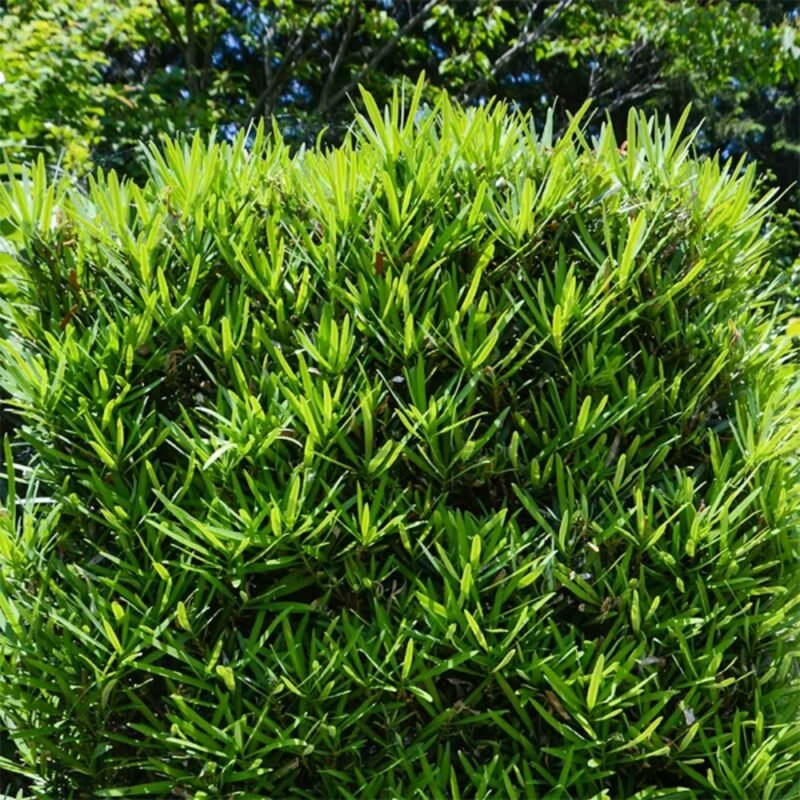
Podocarpus grows narrow and upright, so it fits the strip between a driveway and a fence or along a pool cage. In addition, it takes well to tight shearing, which means you can keep it slim and tall for years.
Height is less of a problem for either plant. Both can be held at 6 to 10 feet with regular trimming. That said, both become small trees if you ignore them, so keep them away from power lines.
How far apart to plant each one
Because sweet viburnum grows wide, we space it 3 to 4 feet apart on center for a hedge. Podocarpus needs closer spacing, about 2 to 3 feet apart, since it is slower and narrower. Our sweet viburnum hedge guide and podocarpus spacing guide include plant-count tables for common fence lengths.
| Hedge length | Sweet viburnum at 3.5 ft | Podocarpus at 2.5 ft |
|---|---|---|
| 25 feet | 8 plants | 11 plants |
| 50 feet | 15 plants | 21 plants |
| 100 feet | 29 plants | 41 plants |
To work out your own count, divide the length by the spacing, round down, then add one plant for the end.
Sweet Viburnum vs Podocarpus Maintenance
Fast growth has a cost, and with sweet viburnum it is trimming. A formal sweet viburnum hedge usually needs shearing several times during the growing season to stay neat. Also, shape it wider at the base than at the top so sunlight reaches the lower branches.
Podocarpus is the low-effort choice once it fills in. One or two light shearings a year usually keep it tidy. On sandy soils, though, UF/IFAS notes it can show magnesium deficiency, so a palm or shrub fertilizer with magnesium helps keep the color dark green.
Water needs are similar. Both need regular water for the first several months while roots spread, then both rate high for drought tolerance. Our page on caring for plants after they arrive covers the first few weeks step by step.
Pests, Problems and Pet Safety
Neither plant is high maintenance when it comes to pests, but sweet viburnum sees more trouble. The UF/IFAS fact sheet lists viburnum aphids, scale, and occasional thrips or mites, plus leaf spots and mildews, though it notes most cause little damage. In our experience, a crowded, shady hedge with poor air flow shows problems first, so good spacing helps.
Podocarpus is tougher. UF/IFAS says scale, mites and sooty mold bother it occasionally but not seriously.
Pet safety is worth a closer look, especially if you have a dog that chews. The NC State Extension Plant Toolbox lists podocarpus as toxic to dogs and cats, and its seeds can cause vomiting and diarrhea in people. Sweet viburnum berries are also mildly toxic if eaten. Also, UF/IFAS does not consider either plant an invasive problem in Florida.
Which Hedge Should You Choose?
Pick sweet viburnum if:
- You want a tall privacy screen as soon as possible.
- Your yard has room for a wide bed, and regular trimming does not bother you.
- Spring flowers and fragrance matter to you, and you live inland.
Pick podocarpus if:
- You need a slim hedge for a side yard, pool area or driveway edge.
- Your home sits near salt water, or the spot gets only part sun.
- A formal, clipped look with less upkeep suits your style.
Many yards can also use both. For example, plant sweet viburnum along a long back fence where speed matters, then use podocarpus in the narrow side yard or near the front walk. For more options, see our list of fast growing privacy hedge plants, which also covers wax myrtle.
What Arrives When You Order
We ship both plants as live rooted starter plants, under 12 inches tall, potted with the root plug intact and wrapped to hold moisture. They are young plants, so they need time to reach hedge size. Sweet viburnum closes the gap sooner, while podocarpus needs more patience.
Both come as single plants or multi-plant bundles, and bundles lower the cost per plant on long hedge rows. Shipping is free on most orders within the United States, and every order is covered by our 30-Day Happy Gardener Guarantee. If you are new to small plants, our post on buying starter plants online explains what to expect. Fall is also a great time to plant both here, as we explain in our Florida fall planting guide.
Sweet Viburnum vs Podocarpus FAQ
Is podocarpus or viburnum better for privacy?
Sweet viburnum gives privacy sooner because it grows faster and has bigger leaves. Podocarpus gives a denser, more formal screen over time and works better in narrow or coastal spots.
Which is more drought tolerant?
UF/IFAS rates both high for drought tolerance once established. However, both need regular water for the first few months after planting.
Can sweet viburnum grow near the beach?
Not well. It has low salt spray tolerance, so podocarpus or native Walter’s viburnum is a safer choice for coastal yards.
Is podocarpus poisonous to dogs?
Yes. Podocarpus is listed as toxic to dogs and cats, and its seeds are the main concern. So keep fallen fruit and seeds picked up if pets roam the yard.
Do sweet viburnum and podocarpus grow in North Florida?
Yes. UF/IFAS lists sweet viburnum for zones 8b to 10a and podocarpus for 8b to 11, so both fit Jacksonville’s zone 9a.
The Bottom Line
When you weigh sweet viburnum vs podocarpus, start with your site. Pick sweet viburnum for fast privacy in a wide, sunny, inland yard. Choose podocarpus for slim, salt-tolerant, low-upkeep hedges. Still deciding? Browse our full privacy hedge collection, or call us at (904) 664-5227 and we will help you plan your row.